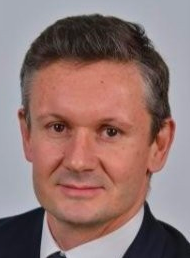
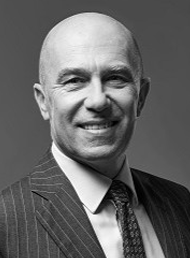
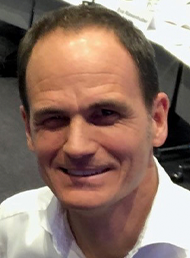
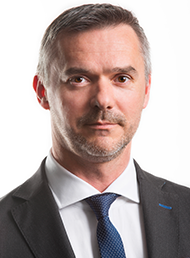
In this GCP Short, produced in collaboration with Friends of the Podcast Spring Consulting Group, Richard is joined by Peter Johnson, Senior Actuarial Consultant, and Prabal Lakhanpal, Vice President, to discuss how captives can provide a greater degree of control during renewals.
The trio discuss some of the drivers of the hard market, whether we may see some rates soften, the benefits of different captive structures and the importance of taking a long term view.
In episode 48 of the Global Captive Podcast, supported by legacy specialists R&Q, Richard examines the Latin American captive insurance market and is joined by guest co-host Adriana Scherzinger, Head of International Program Business and Commercial Insurance in Latin America, for Zurich Insurance Company.
The captive owner interview is with Rene Martinez Flores, Global Director of Insurance & Risk Management for Mexico’s building materials giant CEMEX, while Julián Ávila, Practice Leader for Aon Captive & Insurance Management in Latin America, also joins.
In this GCP Short, produced in collaboration with Friends of the Podcast EY, we explore exactly what is going on with self-procurement taxes in the United States right now.
Joining Richard to shed some light on recent developments in Washington State, Minnesota and New Jersey, as well as providing valuable background and analysis on the bigger picture countrywide is Tim Mahon, a Partner in the EY indirect tax practice, and Conor McKenzie, a Senior Manager in the indirect tax practice.
Lancaster County Solid Waste Management Authority (LCSWMA) formed a Vermont captive earlier this year as it needed to think “outside of the box” to achieve better stability, capacity and pricing.
Market hardening around 2017, particularly in the power generation market, was one of the main reasons why the Pennsylvania-based Authority decided to launch its captive.
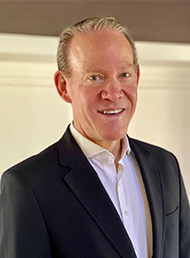
CFO Dan Youngs said in an exclusive interview with GCP that “it became evident that we had to think outside of the box for a longer-term solution”.
He added: “We needed to create a solution that gave better control, that allowed for direct communication with underwriters to really showcase our best-in-class safety and operating standards.”
Youngs said he felt the organisation was “undervalued” by the commercial market considering its “near stellar” track record and loss history.
He said that the pure captive quickly became the solution to these challenges and that it allows LCSWMA to manage its coverage and sub-limits more closely.
The CFO believed that there’s more scope for like-minded organisations to set up their own captives and potentially work with LCSWMA on their insurance programmes in the future.
“I think that’s something we’re looking to do and reaching out to others,” Youngs said. “When you look at complex engineered risks…there is a very active interest in captive formations.”
In this GCP Short, produced in collaboration with Friends of the Podcast the State of Vermont, Richard is joined by Sandy Bigglestone, Director of Captive Insurance at the State, and others to discuss the recent surge in formation activity.
Dan Youngs, CFO at Lancaster County Solid Waste Management Authority (LCSWMA), explains why they formed a captive earlier this year. Sustainable Assurance Company actually became the 1,200th captive licensed by Vermont in its 40 year history as a domicile.
Steve McElhiney, of Artex, expands upon what made LCSWMA an ideal case for a new pure captive and the wider trends driving new formations.
In episode 47 of the Global Captive Podcast, supported by legacy specialists R&Q, Richard is joined by guest co-host Stuart Herbert, Practice Leader for Marsh Captive Solutions in Asia Pacific, for an episode focused on the region.
Stuart discusses the obstacles in the way of captive utilisation, the recent surge in new formations and captive enquiries, and the premier domiciles in the region.
The captive owner interview is with Nigel Jones, Insurance Manager at Australian freight and rail company Aurizon, and Juliet Kwek, Regional Director for MAXIS Global Benefits Network, discusses employee benefits trends in the region.
In this GCP Short, produced with Friends of the Podcast RISCS, Richard is joined by Oliver Schofield, Founder and Managing Partner of RISCS, and Glenn Ellis, a risk and insurance professional with more than 30 years of captive experience.
The trio discuss what the term ‘uninsurable’ means, how captives can such problematic areas and how to bring regulators and the reinsurance market along with you.
Season three of the Global Captive Podcast, supported by legacy specialists R&Q, kicks off with Pete Kranz, Captive Practice Leader at Beecher Carlson, joining Richard Cutcher as guest co-host.
Pete discusses the impact of the pandemic and hardening market on existing and new captive business over the past 12 months, as well as providing his views on the impact Washington State’s new premium tax on captives may have.
The captive owner interview sees a return for Carl Leeman, Chief Risk Officer of Katoen Natie, who reacts to the news several large European countries are considering introducing a new captive framework, the potential changes to Solvency II and how his own captive has responded to the hard market and pandemic.
Steven Beeghly, a Seattle-based corporate and regulatory insurance attorney, helps us make sense of the developments and new legislation coming out of Washington State.
The hardening insurance market dominated most conversations on the Global Captive Podcast in 2020, so how are existing captives meeting the challenge and what formation activity can we realistically expect as a direct result?
Aside from the pandemic, the hard insurance market has been the dominant conversation topic for the captive world over the past 12 months. Plenty of platitudes are shared as to it being a “good time for captives,” but captives are ultimately owned by insurance buyers. This is not a good time for them.
Subscribe to Ci Premium to continue reading
Captive Intelligence provides high-value information, industry analysis, exclusive interviews and business intelligence tools to professionals in the captive insurance market.
29 Years ago Mark became an Insurance and Reinsurance broker, working in London and Madrid.
In 2005 Mark became an Insurance and Reinsurance journalist. In 2008 he joined The Insurance Insider, which grew to be the most successful and influential insurance publication in the industry.
He is the only Insurance journalist to have had a career transacting international insurance and reinsurance business.
Well, that was fun. I’m glad I trousered all those exorbitant fees the stock arbitrageurs were offering while it lasted – such a situation will never happen again in my lifetime. Aon and Willis Towers Watson (WTW) have been reminded that two’s company and three is definitely a crowd. Now they have to go back to competing with each other for a living, instead of deciding who gets the corner office.
No-one can blame Aon CEO Greg Case or Willis boss John Haley for trying. It was a once-in-a-lifetime chance to cement a permanent place at broking’s top table and they embraced it. And it came within a whisker of happening.
Frankly no-one saw the US competition authorities coming because the US big client retail market is more competitive than anywhere else in the world. But for a few electoral college votes in the presidential election, there could so easily have been a different outcome.
The massive loser is Willis. Aon couldn’t lose. Imagine the war-gaming exercise it would have gone through years ago?
Scenario one – the deal goes through: you get to be the undisputed number one broker in the world, forever. You kill one of only two global broking competitors and you gain effective control over your clients. You synergise Willis into having the same margins as you do. The shareholders will love you.
Scenario two: the deal gets blocked. You destroy morale at one of only two competitors. Bits of it fall off. Willis people who thought they were an integral part of a global team find out that they are “remedy assets” to be discarded for the greater good. Human beings tend to react badly to finding out that they are disposable. Would you like to come into work one day to find you have been labelled “remedial”?
Scenario two also instigates a succession crisis. Practically the whole WTW board now has to go. Who will replace them? And who owns Willis stock today? Do they want to stick around or would they prefer a fire sale?
Marsh and everyone else can’t believe their luck. They have had the best possible outcome. Chaos and instability sowed in the hearts of rivals and opportunities opening up left right and centre – all at absolutely zero cost to themselves.
Willis is paying the price for its own defeatism. If you plan for failure, that’s what you get. We often gasp at the size of breakup fees, but a billion dollars doesn’t come close to the damage done to the Willis franchise. It’s chump change for Aon in the long term.
For example, selling Willis Re to Gallagher would have been unthinkable before all this kicked off. Willis Re is not a replaceable asset. Its slightly higher sale price does not reflect its utter uniqueness. It takes two generations and huge commitment to build a major reinsurance broker from scratch.
Yet the day the two-year non-compete is up on the deal, Willis will have to start doing just that. Even if every Willis Re executive had resigned I still wouldn’t have sold for any price. I would have defended the business to the death.
Willis is a unique broking asset that has been undervalued by its own leaders. It is a matter of perspective.
They saw being third in a global race of only three participants not as an opportunity to outgrow the other two and catch them up, but as a poisonous combination of a fixed global cost base with lower revenues and therefore permanently lower margins.
Each to his own. But there is no way anyone with the surname Lockton, Gallagher, Howden, McGill or indeed Plumeri would allow themselves to think in such a negative way! They would want to grow and innovate their way out of the problem. Successful broking CEOs are all eternally bullish, entrepreneurial and aggressive in equal measure. Yet somehow Willis lost its mojo and gave up.
Now it is like a boxer in a three-way contest that has tried and failed to concede. It threw in the towel and fell to the canvas, expecting to be counted out. Yet it somehow finds itself in the bizarre situation where the referee has pulled it to its feet, refused to ring the bell and is telling it to “get out there and fight, for the good of all of us!”.
Willis may not have believed in its ultimate value but the competition authorities certainly did. And you did too. In the last issue I implored you to give one last heave and ask regulators to block this deal. It worked, they listened.
Sometimes in life you simply have greatness thrust upon you. Now is one of those times for Willis. I implore you to re-engage with what is left of the broker and stick with it. Willis is punch-drunk, dazed, damaged and confused. It needs to rediscover some self-esteem.
It really needs a lift from the crowd and you can provide that boost with your loyalty. If you help it through this rough patch your reward will be a nimble and responsive alternative to the big two. You will be the ultimate winner.
But we don’t know what will happen, further leakage is inevitable and a break up of WTW and its remaining broking assets are distinct possibilities.
It all depends on how incoming CEO Carl Hess views the world. For me the job ad for John Haley’s successor should have comprised one simple sentence: “Wanted: someone who really believes in Willis.” We’ll see what Hess is made of soon enough.