
Subscribe to Ci Premium to continue reading
Captive Intelligence provides high-value information, industry analysis, exclusive interviews and business intelligence tools to professionals in the captive insurance market.



Everen is facilitating the global transition to a greener economy by providing an insurance solution to all types of energy companies, both old and new projects, Bertil Olsson, CEO of the Bermuda-domiciled energy insurance mutual, told Captive Intelligence.
Everen Limited, formerly known as Oil Insurance Limited (OIL), was established in 1972 to address the increasingly unmet needs of the energy insurance market for capacity, coverage, and claims payment certainty.
When it launched 50 years ago it had 16 members, and now has 64 with close to $3.5bn in shareholder equity.
While the search for affordable capacity has always been a challenge to some degree, the recent moves by (re)insurers to begin exiting some sectors or pulling back as they look to meet their own ESG related targets has created additional market tension.
Olsson believes such an approach is short-sighted and is where Everen’s attitude differs from parts of the commercial market.
“If you go to these people [oil & gas companies] and say, I want to insure the new low carbon operations but not the old traditional energy operations, they’re going to tell you the old stuff is generating the money to fund the new stuff,” Olsson said.
“If the old stuff can’t be insured, then they won’t risk that cash into the new stuff. So, we’re actually looking at the mutual as being a facilitator for the transition, and that’s exactly the way our members see it.”
Oil and gas companies are struggling to get coverage in the commercial market due to some (re)insurers beginning to restrict cover for traditional oil and gas operations.
“In contrast, we don’t have any specific requirements or restrictions as long as it fits within the definition of energy,” Olsson said.
The Net-Zero Insurance Alliance (NZIA) now has 29 (re)insurers as members, representing around 15% of total global premium volume.
Olsson stressed the green energy transition is incredibly important to Everen, despite providing cover for large oil and gas companies.
“We’re not climate change deniers, but we take a very pragmatic approach,” he said.
“We’re looking at where the investments for the new green energy technology is coming from and to a large extent it is coming from the traditional energy companies.”
Olsson said whether the company is a more traditional energy operation or newer energy operation, the reasons they are choosing to join the mutual are essentially the same.
“It is the long-term stability that they’re looking for,” he said. “We’re not immune to volatility in our pool, but the volatility is less and the predictability is higher with our mutual than what you see in the commercial market.”
Captive Intelligence recently published a long read on how rate and capacity challenges are leading to more companies to consider utilising captivs or self insurance structures for renewable energy.
The 64 members today are insuring around $3.5tn of assets in the Everen pool. He said the company’s definition of energy is “fairly broad”.
Members of the mutual include oil and gas operations, refining, chemical, petrochem, power generation, mining as well as the low carbon technologies, such as, wind, solar, geothermal, biofuel, biogas, hydrogen, carbon capture and storage, and battery technology.
“All of that fits within our definition of energy,” Olsson said.
Olsson stressed that once a company is a member of the mutual, it doesn’t kick anyone out for having claims.
“There’s a premium mechanism for the repeat offender, so to speak, they might actually pay a little bit more, which then reduces the burden for the rest of the members,” he said.
“But there’s no absolute straight correlation between a member’s individual claims and their premium.”
He said that captives in general can be a very useful tool in a renewable company’s tool belt, whether you’re 100% focused on renewables or whether you have some old and some new energy.
“Having a number of different tools available to adapt as your risk management need changes, and as the insurance market is changing, is very important,” Olsson added.
“Those tools should ideally be a combination of perhaps a mutual solution, a captive solution, and a commercial market solution. So, you can take advantage of these three tools as your needs change and as the market environment changes.”
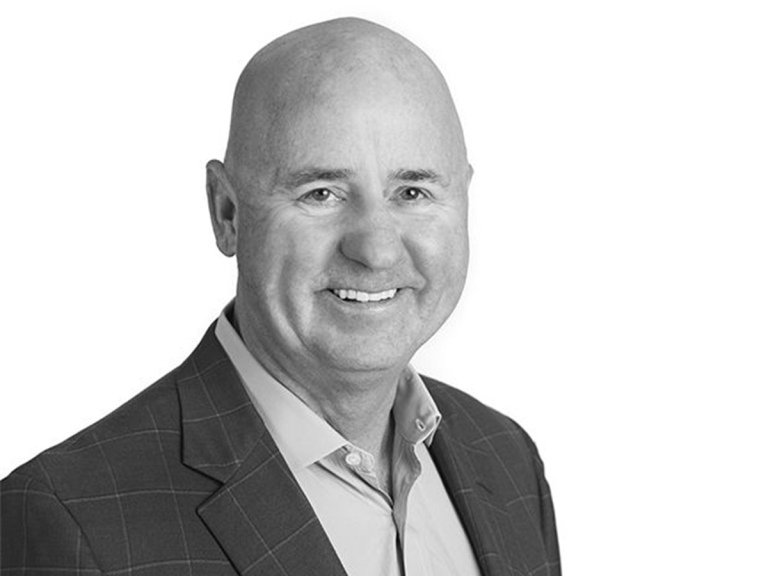
Strategic Risk Solutions has welcomed investment from New York-based private equity firm Integrum Holdings LLP in a deal CEO Brady Young says will “further accelerate our next phase of growth”.
The deal, described as a “partnership”, is not a full acquisition and is designed to progress the independent captive manager’s growth plans.
“We are excited about the opportunity to partner with Integrum to further accelerate our next phase of growth,” said Young, who will remain as the company’s president and CEO.
“Integrum has a demonstrated successful track record of value creation across its current and past investments, and truly understands the alternative risk ecosystem and the value of the independent model.
“This partnership brings the stability and resources that will solidify SRS as a leader in the market for years to come,” Young added.
In the past five years SRS has begun building a significant presence in Europe with operations in Guernsey, Luxembourg, Switzerland, Dublin and Malta.
Previously, the captive manager had been focused on North America, Bermuda and the Caribbean where it has been present for 20 years.
Captive Intelligence understands Integrum first began conversations with Young last summer.
SRS had held talks with several private equity firms over the past year, and before the pandemic had been approached by one large broker-owned captive manager, as well as international brokers that do not already have a significant captive presence.
Young, however, has always been keen to remain independent from a large brokerage, seeing it as a strong part of the captive manager’s unique selling proposition (USP).
Tagar Olson, founding partner of Integrum, said: “The captive insurance industry continues to present an expanding opportunity in both the property and casualty and employee benefits sectors of the market.
“Brady and the SRS team have built a reputation defined by innovation and quality, and we look forward to supporting them as we unlock opportunities that will enhance the services they provide to their clients and the value they bring to their business partners.”
Sources told Captive Intelligence Integrum believes there are “strong tailwinds behind the risk retention industry” and SRS aligns closely with its mandate.
Integrum lists “insurance and insurance services” as one of its four focuses, and already has USI Insurance Services in its portfolio, which it invested in last year.
Young will continue to lead SRS, with Integrum “involved but not driving” and, importantly, providing a capital injection to accelerate growth plans.
Private equity firms have become increasingly interested in risk and insurance services, including captives, in recent years.
The Lee Equity Partners investment in Captive Resources in 2012 has been a huge success story, while Beyond Risk, which has bought up several risk and insurance services companies since 2020, including BevCap ManagementLLC and GPW & Associates, is backed by Summit Partners.
Arsenal Insurance Management, one of those in the Beyond Risk stable, filing for Chapter 11 bankruptcy in January, 2023, however, is a warning that thorough due diligence is required.
The transaction will be subject to customary closing conditions including required regulatory approvals.
Waller Helms Advisors acted as exclusive financial advisor to Strategic Risk Solutions on the transaction, while Insurance Advisory Partners acted as exclusive financial advisor to Integrum.

It could become commonplace for captives to buy parametric cover directly for renewables reinsurance, according to Thomas Keist, global captive solutions leader at Swiss Re Corporate Solutions.
“What we can imagine is actually that the captives will buy the parametric solutions, and then the captive will then provide the cover to the prospective insured’s units,” Keist told Captive Intelligence.
“This is something that we have seen being talked about for a long time.”
Parametric solutions are a type of insurance that is triggered when a predefined event occurs, instead of indemnifying actual loss incurred.
They are most commonly used for natural catastrophe events, based on certain category of earthquake or storm, for example, and are detached from an underlying physical asset or piece of infrastructure.
In locations with particularly high natural catastrophe risk, it can be difficult for insureds to get traditional capacity in the renewables market, and parametric cover can be provided as an alternative.
Captive Intelligence recently published a long-read detailing how rate and capacity challenges are prompting greater captive consideration in the renewables market.
“Because it’s difficult to get traditional nat cat capacity for some of these locations, we are often approached with the question of whether it’s possible to provide a parametric coverage,” one anonymous source said.
Faris Nimri, head of renewable energy at Swiss Re Corporate Solutions, said parametric products would be a positive for captives insuring renewable assets to have in addition to traditional insurance “as there’s only a finite amount of capacity there that you can deploy”.
Keist noted that parametric insurance is interesting because it is transparent, and “it has a very quick pay-out, which is very attractive, especially for investors”.
“There are no hidden exclusions and if they have an option for a coverage that actually provides the capacity they want, and it provides a very transparent coverage that pays out quickly, this might be super attractive for them,” he added.

A challenging property market in the United States is proving a particular headache for risk professionals and captives are a good option when seeking alternative solutions, according to RIMS president Jennifer Santiago speaking in an exclusive interview on the Global Captive Podcast.
Santiago, who is also head of risk management & safety at Wakefern Food Corp, was appointed RIMS president in January. She was co-host of GCP #80.
Santiago agreed “100%” that the hard market of the past three years has only increased the value proposition of captives, citing rising retentions and shrinking capacity as the challenges that can be overcome or mitigated by captives.
“On challenged programmes like cyber and property where you’ve got gaps in coverage, and non-concurrencies in forms, having a captive as an ability to layer in and take a share or a layer, even at the top of your coverage tower, is critical,” she said.
“Buying down your deductibles for your business since often your business units don’t want to take a million dollar or a $2m or a $5m retention. So to me, I don’t know that there’s really a better alternative solution than to having a captive available to do those things for you.”
While Santiago said she had seen more innovative use of captives in lines such as cyber and D&O, she said it should not be ignored how tough the property market remains and the value that a captive can provide in support risk financing programmes in more traditional lines of cover.
“I don’t know what to make of the property market anymore,” she added saying it had almost become “untenable”.
“The options on property are so, so slim and it’s not surprising to look around and see the level of property catastrophic losses that are going on and the frequency, the severity have just increased.”
Santiago said all of the risk management peers she has spoken to are struggling for solutions with parametric policies and catastrophe bonds increasingly under consideration in the search for appropriate cover, while captives remain a good option.
“Captives are another alternative, of course, to layer in on your property programme,” she added.
For risk professionals, understanding the changing risk landscape and putting in place effective risk mitigation and prevention measures are crucial, as well as ensuring there is a financial backstop in place.
“So I think property is one that we may see more organisations putting different extents of layers into the captive where they can afford to take that cat risk.”
Listen to the full GCP #80 episode here, or on any podcast app. Just search for ‘Global Captive Podcast’ on your platform of choice and click ‘follow’ or ‘subscribe’.


In episode 80 of the Global Captive Podcast, supported by legacy specialists R&Q, Richard is joined by the Presidents of RIMS and CICA, respectively.
Jennifer Santiago, head of risk management & safety at Wakefern Food Corp, is in the co-host’s chair in her capacity as the new President of RIMS and discusses her long and varied background with captives and how she’s seen the value of captives only be emphasised and become more mainstream during this hard market cycle. We also discuss RISKWORLD, RIMS’ annual conference taking place in Atlanta from 30 April to 3 May.
Dan Towle, President of the Captive Insurance Companies Association, drops in to preview CICA’s International Conference that begins in Rancho Mirage, California, on Sunday, 5 March.
Sign up to the twice-weekly Captive Intelligence newsletter here.




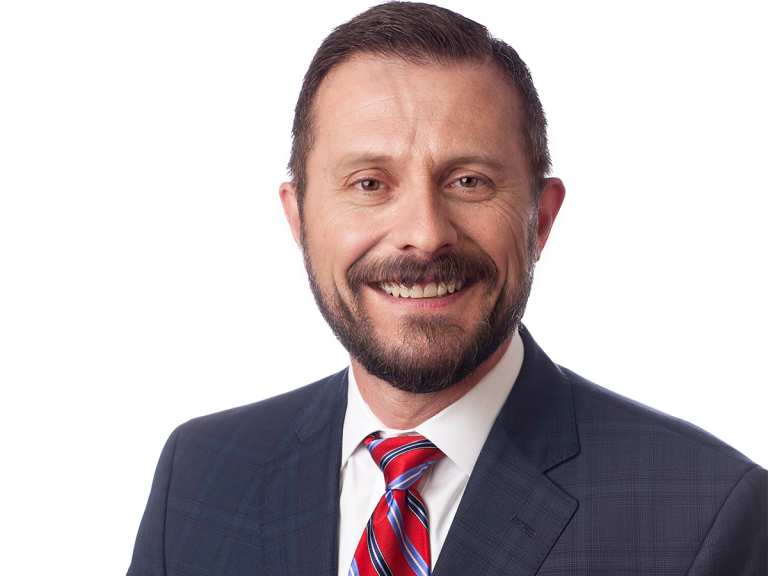
The Oklahoma Insurance Department (OID) licensed 11 captive insurance companies in 2022, and now has more than 50 licensed captives in the state.
Four of the new captives were licensed as series captive insurers, four were pure captives, two special purpose and one a sponsored captive.
Oklahoma had four captive dissolutions in 2022, meaning a year-end total of 52 active captives.
“2022’s results represent the continuous growth of Oklahoma’s captive insurance program,” said Glen Mulready, Oklahoma’s insurance commissioner.
“I am not only pleased with 2022’s growth, but to date in 2023, Oklahoma has already issued three additional captive insurer licenses. This growth is attributable to Oklahoma’s business-friendly environment, modern captive insurance laws and experienced captive insurance staff.”
Steve Kinion, Oklahoma’s captive insurance director, said: “Our Captive Insurance Division’s dedication and efficient regulation of captive insurance companies have helped raise awareness about captive insurance in Oklahoma.
“We look forward to continuing this momentum and expanding our efforts in 2023.”
In a recent interview with Captive Intelligence, Kinion discussed Oklahoma’s “tremendous” potential as a captive domicile.
“Mulready is a commissioner who is what I call an entrepreneurial thinker,” Kinion said. “He wants to make Oklahoma the best insurance department it can be, if not the best insurance department in the United States.”
He noted that Mulready was excited about future of captives in the state, which also helped entice him to the role.
“This is a very good thing because if you have the support from the very top, you’ll be successful,” he said.
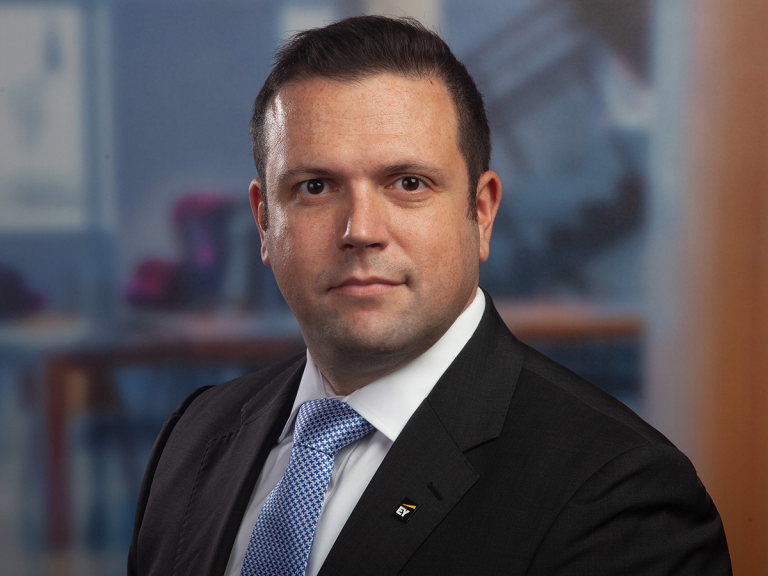
The United States’ Internal Revenue Service is taking a much closer look at transfer pricing and the associated documentation in more substance focused audits concerning captives.
Speaking on a GCP Short released on 23 February, Mikhail Raybshteyn, EY Partner and Americas Captive Insurance Services Co-Leader, and Nicole Henderson, EY Financial Services Transfer Pricing Senior Manager, explained how to get transfer pricing right for multinationals and the impact of this work on premium allocation, recharged premium, IPT and self-procurement taxes in the US.
Transfer pricing refers to the rules which are designed to ensure that the price agreed in a transaction between two related parties is the same price that’s agreed in a comparable transaction between two unrelated parties.
“The IRS has hired and will continue to hire in 2023 additional agents and attorneys to perform audits related to transfer pricing, and that includes an area called economic substance,” Henderson said.
“And the goals of those audits really is to ensure that the IRS is taxing the appropriate amount of profits in the US. So as part of these audits, the auditors will look to assess that intercompany transactions are conducted on an arm’s length basis, and also that there’s the appropriate substance to make decisions for the captive.”
Although it is increasingly common for captives domiciled offshore to elect to be a US taxpayer, Henderson explained that getting transfer pricing documentation right is still important to demonstrate risk transfer occurred and that the captive is treated as an insurance company for US tax purposes.
“Transfer pricing helps to support the accelerated tax deductions in year one as an insurance company or when a new product is added to the captive,” Henderson added.
“Also, if we think about how transfer pricing applies in the state context, a good number of states apply transfer pricing principles under the Internal Revenue Code in their state laws.
“As a result, ensuring that the premium is arm’s length and allocated amongst the group could impact the amount of state tax due.
“We’ve seen some states, including California in particular, taking an active audit position against captives to ensure really that they are able to collect the correct amount of state tax.”
Raybshteyn said that navigating the self-procurement tax landscape, state by state in the US, is still presenting a struggle for captives and captive owners, describing it as “the new 800 pound gorilla in the room”.
“Unfortunately, the self-procurement tax, or direct placement tax, is where it gets really hairy when you talk about allocating premiums and transfer pricing,” he said.
“While different states have various laws on self-procurement tax and how those laws apply, the general rule is that self-procurement tax is based on the policy-by-policy approach, and it requires understanding the location of the home state for each policy.
“In an affiliated group such home state may actually vary from policy to policy. Properly allocated premium may actually shift such home state for a particular policy depending on facts and circumstances.
“There’s definitely balance here between accepted industry standards, actuarial analysis, and transfer pricing methodologies, but neither should be ignored.
“No one size fits all answer unfortunately. And that is why each company needs to take into account the specific facts, technical merits, and of course, its ability to support the position that will ultimately be taken, including the efforts needed to pull together the appropriate and defensible position across the board.”
View and listen to the full Global Captive Podcast archive here, or subscribe for free on any podcast app by searching for the Global Captive Podcast.
© 2025 Global Captive Media Ltd.