
Subscribe to Ci Premium to continue reading
Captive Intelligence provides high-value information, industry analysis, exclusive interviews and business intelligence tools to professionals in the captive insurance market.


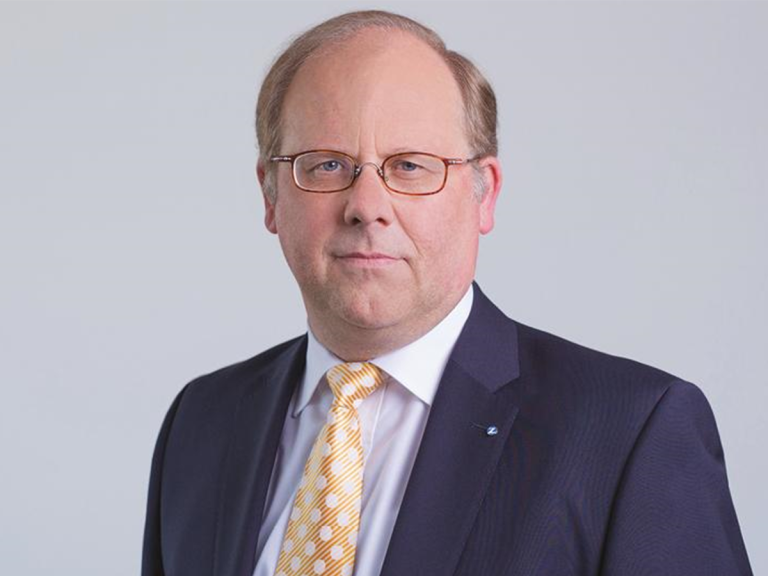
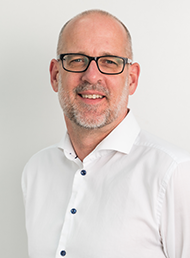
Concert Group has appointed John Hendrickson as CEO, effective from 1 January, 2023, succeeding Jonathan Reiss at the specialist captive fronting business.
Reiss, who assumed the role of CEO at Concert’s inception in 2021, will continue on the board of Concert.
Concert has been backed by founders Brady Young, CEO of Strategic Risk Solutions, Wes Duesenberg, Jr., CEO of Southern Insurance Underwriters, and Christopher Collins, CEO/founder of Corinthian Re, in partnership with Century Equity Partners and WT Holdings, Inc.
Hendrickson has nearly 40 years’ experience, including executive roles at StarStone Group, Validus Group, and Swiss Re.
“We’re delighted to welcome John to Concert,” Brady Young, Chairman of Concert said.
“Throughout his career, John has distinguished himself in delivering quality solutions and support to his client relations.
“His deep knowledge and experience in financial markets and the insurance industry represents precisely the right skill set as we enter our second full year of operation.”
Young said Reiss will continue to provide Concert with his guidance and expertise as a member of the board and aid the transition to Hendrickson.
“I’m genuinely impressed with Concert’s leadership team,” Hendrickson said.
“The company has positioned itself as a specialty fronting carrier focused on serving the captive and programme business market segments. I am excited to capitalize on what I consider a unique market opportunity.”
In GCP #66, Reiss discussed the genesis of Concert, shared his views on the wider fronting market for captives and explained the company’s relationship with Strategic Risk Solutions.
Hendrickson has also served as an advisor to numerous clients in the (re)insurance sector, including as a founding member of Smith Barney’s insurance investment banking practice from 1985 to 1995.



This GCP Short, produced in partnership with Zurich Insurance, is all about the value and selection of outside directors for captive insurance company boards.
Friend of the Podcast Paul Wöhrmann, Head of Captives Services at Zurich, has brought together five expert speakers on this topic, three of which are already independent directors of captive boards.
Over the course of 25 minutes listeners will hear from Andrew Bradley, Malcolm Cutts-Watson and Francoise Carli, who have all had careers packed full with captive experience, and sit on captive boards today.
We are also joined by Xavier Groffils, the manager of the Luxembourg captive owned by Belgian chemicals company Solvay, and Hans-Peter Wagenhöfer, director of insurance and reinsurance at German multinational BASF.
Our expert panel discuss definition of outside and independent directors, how they are viewed in different jurisdictions around Europe and the value they bring to a captive board. Malcolm begins by outlining what he believes are the key responsibilities of a captive board and outside directors.
For more information on Zurich and its captive services, visit its Friend of the Podcast page here.




Aon’s Ciaran Healy is confident more captives will sign up to the United Nations’ Principles for Sustainable Insurance (PSI) with Enel Insurance a “proof of concept” that others should be able to follow.
Captive Intelligence revealed last week that the Netherlands-domiciled captive owned by Italian multinational energy company Enel had been the first signatory to the PSI.
In GCP #76, recorded at the European Captive Forum in Luxembourg, head of insurance Antonio Nervini explained how the captive had used four pillars to deliver value to the group’s sustainability initiatives.
He also made a rallying cry: “It’s time for captives to join the PSI. It’s time to take action.”
Healy and Butch Bacani, programme leader for the UN’s Principles for Sustainable Insurance, also provided further context on the PSI and why they felt it was an important development for captives to recognise and sign up to them.
“The starting point in helping clients understand the sustainability agenda and how it relates to a captive, I always refer to the PSI,” Healy said.
“It occurred to me that a captive actually has a very unique place in this dynamic. It’s sort of the nexus between the real economy or the corporate and I guess what the UN is trying to achieve.
“Making the captive part of that ecosystem and aligning with the structures that Butch has put in place made complete sense.
“And so, understanding the work that Enel had done anyway, they were quite progressive in their captive and how they think about sustainability – Enel as a group is obviously leading from an energy perspective in terms of sustainability – it made sense just to join the two together.”
There are now 220 insurance organisations signed up to the PSI, with the insurers representing one third of global premium and $15 trillion of assets under management.
Aon was the first broker to join the PSI in 2018, which has ultimately led to the work with Enel Insurance on them becoming a signatory.
“Enel Insurance is a very good start on how the engagement with the captive insurance industry could actually be driving positive outcomes for sustainable development,” Bacani said.
“So we believe this is just simply a work in progress as part of the maturity of the PSI, and we’re happy that we are at this stage right now.”
Healy echoes Bacani’s ambition and Captive Intelligence understands a handful of other captives are at an advanced stage in preparing to sign up to the UN’s Principles for Sustainable Insurance.
Healy is “more than hopeful” that there will be further captive signatories to the PSI in the coming months.
“What this is going to do and the work that Enel has done is a proof of concept that a captive actually has a role to play and can do something very positive around sustainability,” he added.
“There is a little bit of a myth of ‘well, the captive is small, I can’t do much around it’.
“But when you think about the protection gap, captives can potentially access reinsurance. So we can make that connection between the corporate ESG agenda, and actual issues on the ground. That’s a really important point.
“I would be absolutely certain, especially after listening to this, that we will get a lot more enquiries and a lot more captives signing up to the PSI.”
To read the Report authored by Aon and the United Nations on Using a Captive Insurance Company to Drive Positive ESG Outcomes, click here.

Twenty-five years ago Protected Cell Company (‘PCC’) legislation was enacted by the States of Guernsey introducing the world to the concept of the cellular company.
A number of local legal, and insurance practitioners were involved in the genesis and drafting of legislation, but it is Steve Butterworth, the Insurance Regulator at the Guernsey Financial Services Commission (‘GFSC’) at the time, who is widely held as being the progenitor of the concept, and the driving force who saw that concept through to fruition.
When he moved to the GFSC from the Cayman regulator in the mid-80s, Steve brought the concept with him.
It had been inspired by the common use of rent-a-captive facilities in the Caribbean jurisdiction. These were single corporate bodies that were licensed to write insurance business, and ‘rented out’ share capital to third parties so that they could take advantage of the captive concept at lower cost to entry and with faster speed of establishment.
There was a desire in Cayman of both sponsors and users of these facilities to provide greater asset protection than could be offered by just contractual agreement and strict application of accounting protocols which Steve found replicated in Guernsey.
The first PCC law of 1997 enabled formation of a single legal entity that encompassed both a core and a theoretically infinite number of cells. The core and cells were differentiated by the issue of share classes which provided the shareholders with different rights.
Core shareholders had those rights that would usually attach to ordinary shareholders, i.e. voting rights at shareholders meetings and the right to distributions arising from profits attributable the core of the company. Cellular shareholders had rights only to distribution of profits arising from the specific cell to which their shares referred.
At the same time labilities of the companies were segregated so that creditors would have recourse only to the assets of the core or the assets of the cell with which they had contracted (actually the first draft of the law provided for a default position whereby cellular creditors enjoyed automatic recourse to core assets, but this was soon reversed).
So, a corporate form was born that added statutory protection to the rent-a-captive concept.
Early uses of the PCC were generally restricted to captive insurance vehicles, and through the captive boom of the mid to late ‘80s and through the early ‘90s, Guernsey protected cell companies grew consistently as a new type of home for captives that, similarly to the rent-a-captives were distinguished by lower cost and faster speed of entry.
Guernsey’s success was soon emulated around the world with numerous variations of the cellular vehicle springing up, first in other international insurance domiciles, and latterly onshore notably in the US and UK. There are now versions of cellular companies in more than 40 domiciles worldwide.
The first wave of cellular companies mirrored the PCC, being single legal entities encompassing a core and multiple cells, known variously as Protected Cell Companies (PCCs), Segregated Account Companies (SACs), or Segregated Portfolio Companies (SPCs), amongst other names.
As the jurisdictions and names proliferated, so the use of these vehicles grew. The speed of establishment, ability of a PCC to spread its statutory minimum capital requirement across multiple cells, and concentration of knowledge of expertise in one sponsor, board of directors and administration team saw cells of PCCs increasingly used to facilitate transformation of investment contracts into insurance contracts, and vice versa.
Single cells were often formed to support single transactions, and this led to an explosion in the number of cells through the late 2000s and 2010s as the ILS market started to use cells as their vehicle of choice.
Also during the 2000s, the use of PCCs was extended to licensed investment vehicles. The statutory separation of assets and liabilities, all over seen by one board of directors and administered by one manager, proved to be just as attractive to clients of the investment management fraternity as it had to the clients of the insurance management community.
Contrary to the sequence in most countries, PCC legislation was first introduced in the UK to accommodate umbrella investment vehicles, and was only latterly extended to facilitate the establishment of ILS PCCs. In the late 2000s a variation on the PCC emerged: the Incorporated Cell Company (ICC). This was a collection of distinct legal entities made up of a core and multiple cells all of which shared a central board of directors and administrator.
These have become the vehicle of choice for pension funds looking to use cells to transfer longevity and other risks out of the pension fund to reinsurance capacity.
There are many factors that go into deciding whether a cell vehicle is right for a particular business need. Location is one of those factors. We have set out some of the key differences that apply to the principal cellular company jurisdictions throughout the world.
In the US, cell companies are referred to by a wide variety of names. Different states have not only different naming conventions, but also different forms of vehicle which are too varied to explore within he confines of this short article.
Common benefits that cell vehicles may provide are lower upfront capital, less development time, and less cost due to economies of scale. Protected, incorporated and Series LLC cells are available depending upon the needs of the insured.
Because of quick establishment and lower upfront capital costs, there has been a huge increase in cell growth during the past 10 years.
At one time, the core capital required for a cell facility was more than a million dollars, whereas now it can be as low as $75,000.
Cells are only used for insurance business and once regulatory approval is achieved, establishment of a cell in the US can happen relatively fast, usually between two to four weeks.
Looking forward the industry suggests that cells used to support genuinely “entrepreneurial structures” may be established to enable the insured to participate on risk when there are capital constraints.
This means cells could help programmes getting off the ground by eliminating the need for regulatory capital as that has been addressed by the Core.
Segregated Accounts Companies (SAC) are formed in accordance with the Segregated Accounts Companies Act 200 under Bermuda Law. They can also be formed under private acts which may provide more concrete protections to the segregation of assets and liabilities specific to the company.
The segregated account structure can be applied across a range of captive and commercial licenses (1, 2, 3, 3A, and 3B). The most common use of Segregated Account Companies refers to a class 3 i.e. captive insurance business.
Bermuda cells are mostly used as an entry point to the captive concept. Sometimes they’re used where stand-alone captives would be too expensive. We are increasingly seeing Bermuda cells used to provide Side A Directors and Officers (D&O) insurance which is supported by the active Rhode Island market.
The strong Rhode Island market presence in Bermuda certainly helps generate interest as a domicile. Class 3 companies can benefit from the ability to write risks unrelated to the core owner without imposing the Bermuda Solvency Capital Requirement (BSCR) solvency model (Solvency II equivalent).
Bermudan cells are also commonly used as Special Purpose Insurers (SPIs) and Collateralized Insurers (Cis) within the ILS space. The three most common benefits that a cell vehicle in Bermuda provides are:
Incorporated Segregated Accounts Companies (ISAC) are available in Bermuda, but less common.
Specific regulatory approval is required to establish a cell in Bermuda, but the regulator will typically allow cells to be formed in accordance with the business plan/license restrictions without prior approval and just with notification at year end.
Going forward the SAC act will continue to underpin the ILS industry through CIs and SPI licenses. Cells will also be used within the rent-a-captive model and will continue to provide support to the commercial fronting (non-admitted/non-rated) space and for hard to place coverages such as cyber/D&O as relief from distressed commercial markets.
Cell companies are called Segregated Portfolio Companies (SPC) in the Cayman Islands and are mostly used for segregation of assets and liabilities.
That can be for a single parent captive that may want to have a certain line of coverage segregated or for a rent-a-captive that allows other parties to set up their own cell(s) within a larger structure. The three most common benefits that a cell vehicle provides are:
The Cayman Islands SPC structure does not on its own create cells that are incorporated as separate legal entities. However, there is specific legislation for Portfolio Insurance Companies (PIC) that allows for an incorporated entity within an SPC structure.
PICs allow for contractual relationships to be established between any external party and between any cells of the SPC and also have the advantage of allowing for separate governance within the SPC structure.
They can also be used to streamline a cell’s transition into a stand-alone company should that be the desire of the PIC owners.
When it comes to regulatory approval, to establish a SPC, approval from the Cayman Islands Monetary Authority (CIMA) is required.
SPCs can also be created for investment fund purposes or other finance related activities where the segregation of assets and liabilities within a single entity would be desirable, but an SPC cannot be utilized for both insurance and investment fund purposes.
As a result, there has been a large portion of growth in Cayman related to SPCs. Currently there are 148 SPCs licensed in the Cayman Islands and cell growth within the island has increased.
Malta is the only EU member state with PCC legislation which was passed in 2004. Cell owners setting up a cell vehicle in Malta may avail themselves of Freedom of Service and Freedom of Establishment passporting rights to write business across all EU/EEA countries, whether set up to:
Because of hardening markets, capacity issues, and access to the EU/EEA markets, establishing a PCC in Europe has multiple benefits such as:
Businesses looking to establish a PCC or create a cell are required to get the approval and authorization of the Malta Financial Services Authority (MFSA).
Malta has enacted legislation for both PCCs and Incorporated Cell Companies (ICCs). Within the insurance market the PCCs are sector specific, for example, Insurance PCCs can only have insurance cells, Management PCCs only management cells, and Broker PCCs only broker cells.
For the future, Malta should expect to see growth in the PCC market driven by the creation of cells with added interest from FinTech and InsurTech sectors.
Just as in Malta and other parts of Europe, cells are referred to as PCCs and are used for captives, insurance-linked securities, transformers, and commercial insurers.
Guernsey was the first jurisdiction to introduce this type of vehicle 25 years ago, therefore they are commonly used for a wide variety of structures.
PCCs in Guernsey can be established quickly and provide ongoing expense and capital reduction. Both protected cells and incorporated cell companies are available. Within the insurance sector, ICCs are used mostly for pension longevity risk transfer deals.
In order to establish a cell in Guernsey a business would need regulatory approval. Pre-approval is sometimes available to certain types of SPI and captive cells.
Cells can also be used for other reasons besides insurance business. Investment business and other types of support for regulated financial services activity is permitted.
Cells in the past 10 years have been an engine of growth for the insurance sector in Guernsey. Regardless of where you choose to establish a cell vehicle, the overall benefits can be fruitful. Each of these locations is an option to reap the benefits of a captive.
Read and download Strategic Risk Solutions’ white paper on Cell Vehicles and Domicile Differences here.



In episode 77 of the Global Captive Podcast, supported by legacy specialists R&Q, we have an exclusive discussion with Meta and its insurance partners in which they explain its new and unique approach to insuring Side A D&O through its own Hawaii-domiciled captive.
Richard in joined by Janaize Markland, director of business risk and insurance at Meta, Lauri Floresca, a specialist D&O broker with Woodruff Sawyer, and Nick Troxell, manager of global captive fronting at Allianz Global Corporate & Specialty (AGCS), who discuss the context of the hard D&O market of the past three years, recent corporate law changes in Delaware that made the solution possible and the structure of the ‘Laser DIC’ Side A policy that has been deployed.
Read the associated article here.
© 2025 Global Captive Media Ltd.