
Subscribe to Ci Premium to continue reading
Captive Intelligence provides high-value information, industry analysis, exclusive interviews and business intelligence tools to professionals in the captive insurance market.




Alternative Risk Transfer (ART) is all the rage. It has become difficult to find a captive industry event that does not have a panel debate or roundtable focussed, at least in part, on ART.
New specialist ART brokers and (re)insurers are forming in anticipation of growing demand and the established brokers and (re)insurers are heavily investing in their respective ART teams and marketing budgets.
Most importantly, risk managers are pushing the boundaries in this space, exemplified by the formation of independent corporate working groups – demonstrating that ART is no longer a fringe topic… but why?
The simple answer is that ART is becoming a necessity rather than a “nice to have”.
Though the definition of ART is both ambiguous and wide ranging in its very nature, at its core it refers to methods of transferring, financing and retaining risks outside of the traditional (re)insurance markets, some of which we will explore in more detail.
Many ART solutions have been available for a considerable amount of time but have been substantially underutilised – until now.
There is a strong correlation between the growing popularity of ART solutions and the increasing use of captives, both through new formations and more strategic use by existing owners. Having a captive provides the owner much greater strategic agility. It is increasingly becoming integral to a captive owner’s overall enterprise risk and (re)insurance strategy.
It’s undeniable that a key factor in the shift in mentality is attributed to the increasing volatility of the traditional (re)insurance markets in recent years, particularly during and post Covid, when capacity became very constrained and/or prices increased dramatically.
This was particularly evident in certain classes of business such as property (natural catastrophe), cyber and D&O.
For many corporates, the sharp rate increases, and rapid removal of coverages forced them into rethinking their (re)insurance strategies. The result has been a fundamental shift in mindset.
Another key factor is the increasingly complex and connected risk landscape that captive owners operate within. Captive owners are waking up to the fact that no longer will they be able to continue to maintain status quo (re)insurance strategies of purchasing products on a mono-line, annual basis at increasing prices, if they wish to respond efficiently and effectively to the challenges being presented.
The requirement is now to take a more enterprise view to build tailored solutions that create longer term value.
One of the key tools in the ART toolbox available to captive owners which are well equipped to combat these challenges are structured risk solutions.
Typically, these are either multi-line or multi-year transactions or a combination of both, which achieve diversifications across time and class. They provide each loss or aggregate protection to captives in an individualised and bespoke manner.
It is the diversification of risk across both time and class that enables captive owners to respond to the challenges presented. Diversification enables captive owners to smooth volatility and transfer/finance risks which may be too complex or connected for the traditional (re)insurance markets.
In traditional (re)insurance purchasing strategies this key value is forgiven to the market through the purchasing of (re)insurance on a per class of business and annually renewable basis.
The individualised and bespoke nature of these transactions has contributed to their lack of widespread adoption to date.
For many captive owners, these solutions were misunderstood and perceived only to be appropriate for mature, sophisticated and well capitalised captives. A misconception that was inadvertently (or purposefully in some cases) exacerbated by the lack of investment in ART talent/teams and solutions within both brokers and (re)insurers.
Too often, these structured risk solutions were viewed as short-terms responses to hard markets rather than long-term strategic tools. Aside from a few experts who have been championing these solutions for years, the industry has had difficulty articulating the substantial benefits these solutions provide in a concise, clear and consistent manner, most importantly which could be easily understood by captive owners.
It is fair to say these solutions were viewed more of a “nice to have” than a necessity.
The common misconceptions and lack of investments are changing and changing rapidly. As a former risk manager, I experienced this shift firsthand.
In 2022, as a direct response to the rapid hardening of the cyber market and faced with the real possibility of being unable to obtain the necessary coverage, my previous company formed a newly incorporated captive.
It was evident whilst undertaking the feasibility study, in advance of the formation of the captive, that diversification of risk across time and class was key to its long-term success. This approach was not possible without the use of a structured risk solution from day one, in the form of an annual stop loss aggregate policy (multi-line).
Most importantly, it enabled the corporate to stay within its risk appetite, and exchange (for a fixed cost), the unwanted aggregate financial volatility, whilst at the same time being able to retain meaningful amounts of risk across numerous classes. The result was a significant reduction in the overall Total Cost of Risk.
As captives mature, the risk financing strategies must evolve. The short-term nature of purchasing traditional (re)insurance is both inefficient and leads corporates to face greater susceptibility to volatility.
The rapid pace of change in the risk landscape requires the implementation of a longer term (and enterprise-wide) approach to risk financing/transfer if capital requirements are going to be met going forward.
Maximising capital & operational efficiencies and closer alignment with a wider enterprise risk management framework are key aims of most captive owners. A multi-line, multi-year structured risk solution achieves this.
It unlocks many economic and operational benefits. It better aligns risk with capital, avoiding unnecessary premium leakage and the ability to retain more underwriting profits. To maximise the success of these solutions there is accountability on the captive owner.
It requires them to take a holistic, data driven approach to risk financing, one that is very closely aligned with the wider enterprise risk management and corporate strategy. It is very unlikely that a partnership with a capital provider will be successful unless these are clearly evident.
Despite common misconceptions, the benefits of these solutions are confirmed and compounded even further when a large loss occurs.
Taking a longer-term approach provides the captive owner greater budgetary stability as they are able maintain control over the pricing and coverages provided. It removes the potential uncertainty of a sharp correction in premium or the removal or restriction of coverages, which are both present in any traditional annual (re)insurance transaction, following a large loss.
This has been corroborated by several experienced captive owners who have adopted these structured risk solutions for a sustained number of years in both softer and harder markets.
Parametric insurance, catastrophe bonds, insurance linked securities and loss portfolio transfers are just a few other ART tools at the disposal of captive owners. Each of these solutions enables even greater flexibility and adaptability.
As strategies evolve, investments by brokers/(re)insurers continue and alternative forms of capital is attracted to participate, it is highly likely that these solutions will continue to rise in prominence and use over the longer term.
The increasingly complex and connected risk landscape within which businesses operate within is becoming the norm not the exception. It will continue to necessitate the use of these financial solutions as traditional sources of capital will no longer be efficient or sufficient.
The rhetoric from key industry leaders continues to back this up. Aon CEO Greg Case recently told the Financial Times “If we don’t bring in a trillion dollars of alternative capital in the next decade, we’ve failed.”
No longer are ART solutions a nice to have, they are a necessity.
Property remains a key driver of captive utilisation in 2025 and is expected to continue as insureds use a variety of programme structures.
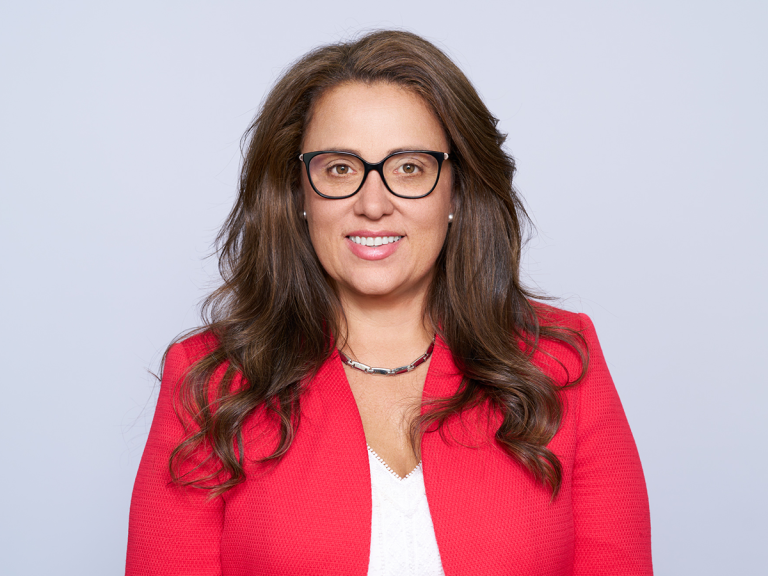
Speaking on the latest episode of the Global Captive Podcast Adriana Scherzinger, global head of captives at Zurich, was joined by Ian Ascher, executive director for global risk management at Jones Lang LaSalle, Sandy Bigglestone, deputy commissioner for captive insurance at the State of Vermont, and Michael Serricchio, US & Canada regional leader at Marsh Captive Solutions.
The guests recreated the panel they produced for the RISKWORLD conference in Chicago in May, which addressed the drivers of insuring property through captives, how to design an appropriate programme, and the importance of understanding the risk appetite of the group.
“Property insurance is a great fit for captives, especially as companies look for stability and control,” Scherzinger said.
“And captives offer organisations a real advantage, right? The long-term pricing and stability, the ability to keep underwriting profits, the stronger risk management, plus access to reinsurance, and robust governance.
“And even as the commercial property market shows signs of moderation, we are seeing more companies use captives to retain greater risk and prepare also for the unexpected, from natural catastrophes to geopolitical unrest.”
Serricchio said that property is the number one line of coverage written by Marsh’s global portfolio of captives, with around $7.7bn of premium in 2024.
From 2023 to 2024, there was a 10% increase in property premiums running through Marsh captives, while from 2022 to 2023 there was a 29% increase.
“These are huge numbers,” Serricchio said. ”These are multinational corporations, large organisations that are writing all types of property lines in their captives.
“That could be deductibles, it could be quota share, it could be ventilated layers in the programme, shared layers in terms of taking premium out of the market and having the wherewithal and the ability to put that line of coverage or that layer into your captive for some premium savings.”
Jones Lang LaSalle is a global real estate firm, generating around $20bn in annual revenue.
Ascher explained that the company has developed a more globalised structure, which has helped evolve and improve its captive strategy.
He said that the challenging commercial property insurance market was becoming unsustainable, especially as the firm often required low deductibles to meet certain lender requirements.
“So we ended up increasing our deductible through our captive, while still allowing for a lower deductible at the business unit level and to comply with contractual requirements,” Ascher explained.
“It was really the difficult commercial market that that led us there, but also maturing as an organisation led us to the strategy.”
In Vermont, the largest captive domicile in the world, Bigglestone said that they are seeing increasing property premiums across their captives.
“With respect to property placements, Vermont has captives increasing retentions almost at a rapid pace,” Bigglestone said. “And sometimes those retentions are forced retentions.
“The company owning the captive doesn’t have a choice because it’s cost prohibitive or just not being offered in certain layers of their property tower. So expansion of current business plans beyond typical casualty lines is what we’re seeing.
“The property market and geographical cross-subsidization has driven the formation of more captives as well. We see many of these companies with very good loss histories and a solid commitment to risk control making the company a better than average prospect for captive usage.
“These increases are seen across almost all industry sectors here in Vermont, with property being more prominent in new formations within the real estate industry sector.”
Listen to the full discussion on the latest episode of the Global Captive Podcast here, or on any podcast platform. Just search for ‘Global Captive Podcast’.

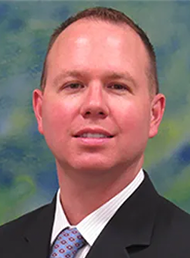

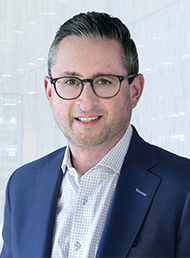
In this GCP Short, produced in partnership with Zurich Insurance, a panel of leading captive experts recreate their popular session at RISKWORLD 2025 to debate and discuss why property programmes continue to be such a popular addition to captive insurance companies.
Adriana Scherzinger, Global Head of Captives at Zurich, Ian Ascher, Executive Director for Global Risk Management at captive owner Jones Lang LaSalle, Sandy Bigglestone, Deputy Commissioner for Captive Insurance at the State of Vermont, and Michael Serricchio, US & Canada Regional Leader at Marsh Captive Solutions, explain how property risk is commonly structured in a captive, the drivers in both hard and soft market cycles, and the importance of definining the group’s risk appetite for such coverage.
For the latest news, analysis and thought leadership on the global captive market, visit Captive Intelligence and sign up to our twice-weekly newsletter.




© 2025 Global Captive Media Ltd.