
Subscribe to Ci Premium to continue reading
Captive Intelligence provides high-value information, industry analysis, exclusive interviews and business intelligence tools to professionals in the captive insurance market.



Alliant Insurance Services has launched Alliant Re, a reinsurance brokerage division, which will include offering captive reinsurance solutions.
Alliant Re will leverage proprietary data and analytics, industry relationships and insurance expertise to navigate market conditions and provide customised risk transfer solutions to protect insurers from large losses.
Reinsurance solutions offered by Alliant Re include facultative insurance, automatic and semiautomatic reinsurance structures, deductible buy-downs, captives, managing general underwriters (MGU) and individual risk placements and programs.
“It is critically important for insurance carriers to have effective risk transfer solutions in place to protect against unforeseen and catastrophic losses, which are happening all too frequently,” said Tom Corbett, Chairman and CEO of Alliant.
“Our established reinsurance brokers have the relationships and experience to help ensure clients have the financial resources to pay out large claims when appropriate and remain viable in the insurance market.”
Alliant Specialty boosted its captive capabilities in September 2022 when it hired Pete Kranz, formerly captive practice leader at Brown & Brown, as a senior vice president to lead its risk finance and strategic consulting solutions.
Alliant Insurance Services is one of America’s leading distributors of diversified insurance products and services, operating through a network of specialised national platforms and local offices.
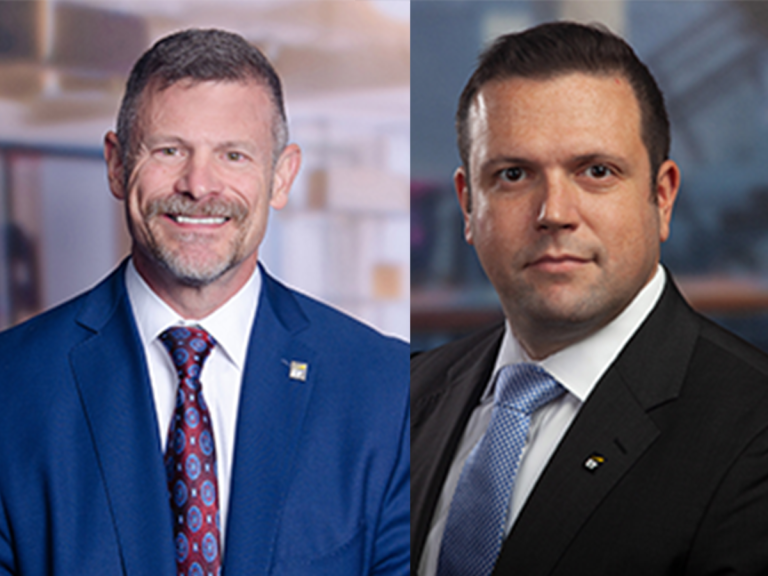
EY has confirmed it will limit tax services and not report any benefits from ‘listed transactions’ on tax returns should the Internal Revenue Service’s criteria for micro-captives in its proposed regulations be confirmed later this year.
Speaking on a GCP Short, Paul Phillips, EY partner and Global Captive Network co-leader, and Mikhail Raybshteyn, partner and Americas Captive Insurance Services co-leader, gave their views on the proposed regulations published 10 April, what they mean for captive owners and services providers.
The proposed rules set the criteria for whether captive insurance companies making the 831(b) tax election should be designated listed transactions, transactions of interest or neither.
The captive industry has been encouraged to submit comments in response to the proposed regulations by 12 June, with a public hearing due to be held on 19 July, 2023.
Raybshteyn said the 831(b) tax election remains valid because it is still congressionally approved law and tax code, but that does not mean they are “free of scrutiny”.
“As we all know, due to some abuse in this space, the IRS’s focus in this space increased and the proposed regulations is the latest step in the IRS’s approach to review and assess legality of certain transactions that the IRS deems abusive and have been used as such by some of the participants,” he said.
“As we’ve mentioned on numerous prior occasions, a captive insurance arrangement needs to be structured for valid business and insurance reasons, not tax reasons. Validly structured arrangements should be well documented and supported.”
Many service providers that work with captives taking the 831(b) tax election likely now have a choice to make, especially those that have clients that fall into either of the ‘listed transaction’ or ‘transaction of interest’ buckets.
Jeremy Colombik, managing partner at Management Services International, told Captive Intelligence last week that he would be more hesitant to manage 831(b) captives that qualify as a transaction of interest, and he would not work with any that qualify as listed transactions.
The majority of EY’s captive work is with larger captives, often owned by multinational corporations and writing tens or even hundreds of million in premium, but Phillips said it was EY’s policy not to work with structures that are designated a listed transaction by the IRS, aside from helping clients to exit them.
“I suspect that many service providers would have internal policies or internal controls that would prohibit them from participation or assistance with any transaction that the government has deemed abusive,” Phillips said on the Global Captive Podcast.
“For EY and our team, the difference between a transaction of interest and a listed transaction is important because, by policy as well as our own operational controls, EY will not participate in a listed transaction.
“And with this restriction, it includes the fact that EY will not be the preparer of a tax return that reports the benefits of a listed transaction.
“So as a listed transaction, the only real tax assistance that we will provide is how to properly exit the transaction.”
Listen to the full 19-minute podcast episode with EY’s Paul Phillips and Mikhail Raybshteyn on Captive Intelligence here, or on any podcast app. Just search for ‘Global Captive Podcast’.

A large fintech company has followed Meta’s lead in transforming its Hawaii single parent captive into a cell company and insuring Side A D&O in a cell.
Captive Intelligence revealed in December in an exclusive Global Captive Podcast episode featuring Meta’s Janaize Markland that the social media giant had used a cell to support a ‘Laser DIC policy’ tailored to ensure directors and officers retain coverage equivalent to the commercial market.
Restructuring Hawaii-domiciled Honu Insurance Company, LLC into a cell captive allowed Meta to separate the D&O capacity from other risks in the captive.
“There’s been one other that’s actually already almost accomplished that identical conversion and that should be in the can very soon,” Paul Shimomoto, partner at Hawaii law firm Goodsill, said on a GCP Short released on 23 April.
“I am hearing rumblings from others they want to think about it, they want to hear about it, and explore it. At least in Hawaii anyway, I do think that because of the kinds of parent companies and captives that we have I do think there’s going to be more.”
Hawaii is a popular domicile of choice for large west coast technology companies. Multinationals including Google, Tesla, Uber, Lyft and Airbnb own captives in the state.
Captive Intelligence understands the other business to utilise a cell for Side A D&O is a fintech which originally formed a pure captive in Hawaii within the last five years.
Matt Takamine, captive practice leader at Brown & Brown, added: “I think Hawaii is a good jurisdiction because the path has been laid with that Side A D&O, especially with the kind of companies that we have doing business in the state, a lot of large publicly traded Fortune 500 companies.
“That is an important exposure for them.”
Meta worked with broker Woodruff Sawyer on the Laser Side A D&O structure, with Allianz Global Corporate & Specialty (AGCS) supporting the policy.
The innovation was originally pursued by Meta because of changes to the Delaware corporate code in February 2022 that explicitly allowed captives to insure some Side A exposures.
AGCS published its Global Risk Dialogue on 25 April with a section focused on the D&O law changes in Delaware and how the insurer has worked with captives, including Meta, in implementing such structures.
Nick Troxell, manager of global captive fronting at AGCS, said: “Delivering an innovative solution like this called for collaboration between the insured, the broker, and the insurer.
“We had a full steering committee working on this project, with in-house experts from claims, legal, financial lines, distribution, and risk consulting.
“It was vital to establish a strong rapport from the outset so we could respond with agility to the clients’ needs and support them through this process.”
Captive Intelligence reported in March that Marsh Captive Solutions had established a new cell facility in Delaware, specifically designed to serve clients seeking alternative risk transfer options for Side A directors and officers (D&O) insurance.
“The approved Delaware law is a significant step forward as it allows more companies to consider a wholly owned captive or a “cell” as a partial or complete solution for covering Side A D&O claims,” Donna Weber, senior vice president and pooling & cell facilities leader at Marsh Captive Solutions, said last month.
“We feel that the combination of the new Delaware law, combined with utilisation of a cell facility domiciled in Delaware, provides the closest alternative to commercial insurance with least amount of potential issues.
“As one example, since both the corporate law and the captive law are both Delaware, potential public policy conflicts that may arise if the captive is domiciled outside of DE are removed.”
This GCP Short, produced in partnership with EY, has been recorded in response to the publication of new Internal Revenue Service proposals concerning captives making the 831(b) tax election.
Captive Intelligence published a long read on Friday, 21 April with reaction from across the industry to the proposed regs which sets out definitions that would designate some, potentially many, micro-captives as ‘listed transactions’, and others as ‘transactions of interest’.
In this 18 minute discussion, Richard is joined by EY partners and captive leaders Paul Phillips and Mikhail Raybshteyn who give their view on the situation as it stands, and what the proposed regulations will really mean in practice for captive owners, service providers and the wider industry.
You can read EY’s tax alert on the proposed regulations here, and visit their Friend of the Podcast page for more information on EY’s captive services.





Improved choice and competition by allowing protected cell companies (PCCs) in Luxembourg could create more demand for cell solutions in Europe according to some of the largest captive managers on the continent.
After Gibraltar left the European Union with the United Kingdom post Brexit, Malta is the only EU state that currently has PCC legislation in place, with the concept proving to be popular in the domicile as there are 14 active PCCs today.
A number of captive managers spoke to Captive Intelligence after Valérie Scheepers, head of the non-life and reinsurance department at the Commissariat aux Assurances, said the regulator is open to discussing the possibility of introducing protected cell companies (PCCs) in Luxembourg if there is industry demand.
With Gibraltar leaving the European Union with the United Kingdom post Brexit, Malta is now the only EU state that has PCC legislation. The concept has proved popular in the domicile with 14 PCCs currently active.
Speaking in an interview on episode 82 of the Global Captive Podcast, Scheepers said the onus was industry to present a real business case so rules could then be developed.
Peter Carter, global head of captive insurance management solutions at WTW, said the more jurisdictions that open up to PCC legislation, “the more comfortable and familiar the market could become to these structures”.
Speaking on episode 82 of the Global Captive Podcast, Scheepers said the responsibility was on the industry to present a real business case so rules could then be developed.
“We are absolutely open to the development of new activities if there is a real demand for it,” Scheepers said.
“We have a preference for developing the rules when dealing with practical cases. Otherwise, we have the risk of having an overly burdensome and not appropriate regulatory regime.
“If we have an example, we are really open to analyse it. But as of today, we were not approached with a real case.”
Maxime Schons, managing director at SRS Europe, said that hearing the revelation from the Luxembourg regulator was a surprise, “as it was the first time that we heard about PCC opportunities from the regulatory side in Luxembourg.”
Schons highlighted how clients in the UK or US are generally more used to PCC legislation. “The demand remains really high for new vehicles implementation and whether we deal with captives or cells,” he said.
“The UK and US world is more familiar with cells mechanisms when continental Europe prefers going for captives,” he added.
“With a PCC, you share equity with other members. You have the core on top then you have different compartments, which means you need to share resources, governance key functions, solvency capital requirements.”
However, due to Luxembourg’s strong and established within Europe as a captive domicile, having PCC legislation in the country might boost clients’ appetite for cell structured solutions on the continent.
Carter believes promoters and clients of a Luxembourg PCC would need to consider how the option is differentiated from competing onshore solutions in Malta and offshore solutions from Guernsey and Isle of Man, in order for the domicile to be successful.
Reinsurance captives
One of the challenges in developing an attractive PCC offering in Luxembourg is the fact the regulator is most comfortable, and has a preference for regulating reinsurance captives, rather than direct writing captives which cells are often used for.
“An overly rigid reinsurance only approach could miss out on the opportunity for EU and non-EU sponsors with distributed EU risk looking to passport across Europe and reduce the cost of fronting insurers,” Carter said.
While it is positive that the regulator in Luxembourg is willing to consider the case for PCCs, Claude Weber, managing director and captive consulting leader for continental Europe at Marsh, believes this is only the start of the process, and some legal changes will be required to allow the creation of this structure in the domicile in the future.
“Key decisions need to be taken on the applicability of direct writing entities or only reinsurance entities, the rules to ensure that there would be an absolute protection of all the owners of cells and the owner of the PCC, and the individual taxation per cell or a global taxation of the PCC,” Weber told Captive Intelligence.
Captive manager appetite
Schons said that if Luxembourg introduced PCC legislation, it would not materially impact the way SRS operates, “as we offer either captive solution or PCC solution, only driven by the client’s best interest.”
“Operations remain the same for us regarding the captive management services is just a choice of domicile,” he said.
Carter said WTW has not previously explored Luxembourg PCC options before, mainly because previous talk of a possibility was not followed up with action toward implementation.
“We are always interested in pursuing opportunities arising out of innovation and regulatory change if it can be helpful for our clients,” he said.
“WTW has invested in PCC structures in both Malta and Guernsey, the two largest PCC hubs in Europe.”
Weber said Marsh would certainly welcome another PCC location within the European Union.
“I am confident that Luxembourg will be able to work through these issues and find a viable solution for this project,” he said.
Assets under management in captives domiciled in Malta passed €1bn in 2022, according to statistics provided by the Malta Financial Services Authority (MFSA).
One new captive was licensed in Malta last year, while one was surrendered with 10 insurers classed as captives active in the jurisdiction at year-end 2022.
Of those 10 captives, seven are single parent captives and three are protected cell companies (PCCs).
According to the MFSA, captive AuM jumped from €687m in 2021 to more than €1bn in 2022.
Annual premium written by Malta captives increased from €234m to €240m between 2021 and 2022.
The count of 10 captives, however, significantly underplays the domicile’s presence in the European market since there are around 15 other licensed insurers that are wholly owned by corporate groups that would be counted as captives in most other jurisdictions.
These insurers, such as Vodafone Insurance Limited several owned by automobile multinational, write a high proportion of third-party business and so the MFSA does not include them in its captive count.
For more captive data on new licence activity around the world and year-end figures, visit the Captive Intelligence data page here.
AM Best has affirmed the financial strength rating of A (Excellent) and the long-term issuer credit rating of “a+” (Excellent) of Pfizer’s Vermont-domiciled captive, Blue Whale Re.
The ratings agency said the outlook for these Credit Ratings are stable.
Blue Whale provides coverages with significant limits and elevated potential gross exposures per loss occurrence.
During the hard market, Blue Whale has opted to participate in small slices of its CAT tower as an economic efficiency for the group. It also offers capacity for cyber liability coverage when required.
Its net property retentions remain quite substantial. Nonetheless, AM Best said the reinsurance programme is appropriate and diverse, providing ample coverage for all of its lines of business.
AM Best said it recognises the quality of the reinsurers and the substantial financial resources and support available to the captive as part of Pfizer.
Blue Whale’s historical and prospective operating performance are strong with low average loss and minimal expense ratios. However, volatility of key metrics can be low to moderate with its high retentions for low frequency, high severity coverage.
The ratings also reflect Blue Whale’s balance sheet strength, which AM Best assesses as very strong, as well as its strong operating performance, neutral business profile and appropriate enterprise risk management (ERM).
AM Best said: “As Blue Whale insures or reinsures Pfizer’s global property exposures, it plays an important role in Pfizer’s overall ERM and assumes a critical role in protecting the Pfizer enterprise’s assets”
In addition, a negative rating action could occur if AM Best’s perception wanes of Pfizer’s ability and willingness to support the captive.
Hawaii’s captive profile has “never been stronger”, according to Matt Takamine, captive practice leader at Brown & Brown, citing continued growth in captive premium volume across the domicile and longevity of the captives in the jurisdiction.
Speaking in a GCP Short released on 23 April and recorded at the CICA International Conference in March, Takamine was joined by David Beyer, director of risk management at Alaska Airlines, and Paul Shimomoto, partner at Hawaii law firm Goodsill.
“Hawaii’s captive industry has never been stronger, 255 captives as of the end of last year,” he said.
“I think we’re the largest jurisdiction for Japanese captives worldwide. We have about 40 of them now.”
Takamine said that while Hawaii’s new captive formation number in 2022 was “not stellar” – 13 new captives were licensed last year – the jurisdiction is predicted to have reached $15bn in total captive premium.
“Pretty stunning,” he added. “That’s an average of about $60m a pop for each one of those 255 captives. So, the industry’s doing well.”
The latest assets under management (AuM) figures provided to Captive Intelligence from Hawaii’s Insurance Division showed captives in the domicile now hold assets of more than $30bn.
In the United States, only Vermont has higher annual premium and AuM volume from its captive portfolio.
Alaska Airlines established ASA Assurance in Hawaii in 2016 and Beyer explained that the captive was established to “create some flexibility in our risk management practice”.
“We canvassed the globe in looking for the right domicile and really Hawaii fit top bill for us in every category that we looked at,” Beyer said.
“It’s got a good regulatory structure, good regulatory reputation as well. And then it’s got a solid slate of top-notch vendors that are on island and able to help us do what we need to do. So we’re very happy with what we have with Hawaii.”
Shimomoto said that while every domicile likes to see large numbers of new formations, such statistics “only tell part of the story of a jurisdiction”.
“Premium dollars and activity like that is important, but I think also longevity is a good indication of how long have these captives been around,” he added.
“In Hawaii we have many captives who were formed back in the 1980s that are still here. Thirty-plus years later, still active and growing and doing great new and innovative things.”
Listen to the full GCP Short episode on the Captive Intelligence website here, or on any podcast app. Just search for ‘Global Captive Podcast’.
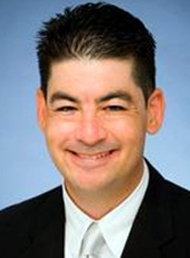
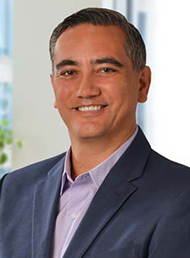
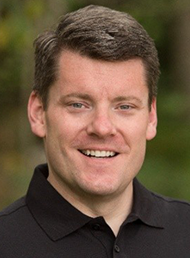
In this GCP Short, produced in partnership with Brown & Brown, Richard is joined by Matthew Takamine, Captive Practice Leader at Brown & Brown, David Beyer, Director of Risk Management at Alaska Airlines, and Paul Shimomoto, Partner at Hawaii law firm Goodsill.
The trio discuss the profile and recent development of Hawaii as a captive domicile, new trends such as Side A D&O going into Hawaii captives and Alaska Airlines’ own risk financing and captive strategy.
For more information on Brown & Brown’s captive practice, visit their Friend of the Podcast page here.
© 2025 Global Captive Media Ltd.