
Subscribe to Ci Premium to continue reading
Captive Intelligence provides high-value information, industry analysis, exclusive interviews and business intelligence tools to professionals in the captive insurance market.



Specialty insurance brokerage and risk management firm, Risk Strategies, has enhanced its captive capabilities with the acquisition of International Insurance Brokers (IIB), a full-service retail agency based in Oklahoma.
Terms of the deal were not announced.
“We’re building out our central region presence as a specialist that brings a client-first, business savvy approach to risk and liability management,” said Steve Giannone, Risk Strategies central regional leader.
“International Insurance Brokers is a great fit for us and this approach to expanding our capabilities without compromise.”
In addition to offering captive expertise, IIB offers commercial and personal lines insurance, as well as a portfolio of business and individual financial products and strategies including financial services, retirement plans, life insurance and annuities.
IIB has a strong concentration of clients across Oklahoma, Kentucky, and Texas.
“As we looked to scale our success, we saw cultural fit as key,” said Caroline Sniff, IIB managing partner.
“Risk Strategies client-first, approach, emphasis on collaboration and depth and scope of resources make them the right fit for our clients and our people.”
Davies has strengthened its presence in Guernsey with the acquisition of the insurance management services portfolio of Ortac Underwriting Agency.
Davies Management Services (Guernsey) was approved by the Guernsey Financial Services Commission in February 2021, but the Ortac deal now delivers significant boots on the ground in Europe’s largest captive domicile.
Ortac’s insurance management division will rebrand to Davies with Ortac CEO Richard Tee continuing to lead the team, reporting into Nick Frost, president of Davies Captive Management.
Steven Crabb, CEO – Insurance Services at Davies, said: “We launched our captive management facility in Guernsey in 2021, with a view to create a captive management centre of excellence for the UK and Europe on par with our successful operations in the U.S. and Bermuda.
“The Ortac team’s expertise, in one swoop, accomplishes that. The team is exceptionally experienced, and in combination with our existing insurance management services and tools, Davies now has the scale, breadth, and talent to provide an invaluable, independent captive management service to companies around the world.”
Davies has made several captive management acquisitions over the past five years, including US assets of USA Risk Group in 2018 and Bermuda’s Citadel Risk in 2022.
The group also acquired Lloyd’s managing agent Asta last year, one of the agents leading development of the Lloyd’s Captive Syndicate project.
Richard Tee, CEO of Ortac, said: “This is an exciting development for the growing Ortac insurance management team.
“The resources, reputation, and ambitions of Davies will be an enormous accelerant to our growth. And our goals are comfortably aligned: to bring full-service, high-quality, leading edge insurance management and underwriting services to clients across the spectrum of sectors.”

Lloyd’s of London is working with an applicant which could establish the first Captive Syndicate in over 20 years, while the London Market Group (LMG) remains confident that the UK government remains keen to pursue a wider captive regime outside of Lloyd’s.
There are two separate captive initiatives in development in the United Kingdom.
One is the Lloyd’s ‘Captive Syndicate’ offering that would facilitate the formation of a captive within the iconic insurance market, while the other is based on an effort to create a new class of captive insurer, within the UK’s current regulatory framework, that would experience a lighter regulatory touch than commercial (re)insurers.
These projects are not in competition with each other, and present quite different offerings to the captive market.
The LMG, which has been lobbying government to welcome captive insurers for over three years, is in favour of a bifurcated insurance regime which would ensure captives writing only first party risk would be treated proportionally in a framework that would look more similar to Bermuda and Guernsey than those regulated within major European Union domiciles, such as Luxembourg and Ireland, that have to follow Solvency II.
Captive Intelligence understands that the UK Treasury has intimated captives will be back on its agenda in January 2024, as it is currently prioritising the Financial Services and Markets Bill and Solvency UK.
The latter project is to reform and update Solvency II, post Brexit, into a more tailored regime named Solvency UK.
Speaking as president of the Insurance Institute of London in a speech in November 2022, CEO Marsh of UK & Ireland Chris Lay threw his support behind the idea of a UK captive regime.
Lay, who ran Marsh’s global captive business from 2014 to 2016, said at the time: “An ambitious regulatory model for captives, combining a proportionate risk-based solvency regime with London’s global reinsurance market, could make the UK a unique and attractive location for captive investment.”
At Lloyd’s, the reintroduction of Captive Syndicates has been discussed and consulted on since 2019.
The first and only captive formed within Lloyd’s was by SmithKline Beecham Plc in 1998, but was put into runoff in 2001 after a merger with Glaxo Wellcome and a review of the group’s captive strategy.
The new offering, which was approved by the Council of Lloyd’s in August 2021, is now being more widely marketed by the corporation itself and several managing agents touting the offering.
A Lloyd’s captive could bring several unique advantages, such as a Lloyd’s rating, access to
insurance licences around the world which would remove the need for a front, and a ready-made insurance infrastructure to support the operation and management of the structure.
The disadvantages, however, are likely to be higher frictional costs, a reliance on managing agents rather than experienced captive managers and restrictions on business plans and the type of insurance that can be written.
Lloyd’s has been very open that the Captive Syndicate will be a niche offering, only really relevant for the largest accounts.
It is also thought that clients who explore this option will likely already have a captive in place and use the Captive Syndicate as an additional tool.
The syndicate application fee is £100,000 and the expected minimum annual premium threshold to make it feasible is predicted to be $20m.
Despite the narrow criteria, there has been interest from large coporates in America, continental Europe, the Middle East and Asia and Captive Intelligence understands there is confidence the first Captive Syndicate could be established by the end of 2023 in time for a 1/1 renewal.
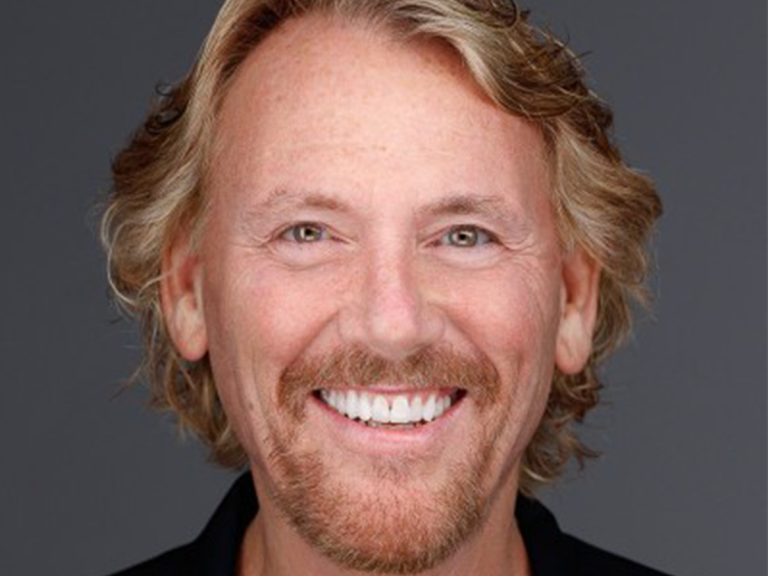
Fluid Truck’s captive insurance programme began writing on 1 April and in an exclusive interview for the Global Captive Podcast, head of insurance Courtney Claflin explained the rationale and motivations for the new formation.
Captive Intelligence revealed in February that the American commercial vehicle truck rental company had established Nereus Insurance Co Inc, domiciled in Washington DC, and would begin by writing auto liability, commercial auto physical damage (APD) and excess.
Fluid Truck makes it easy to rent commercial vehicles 24/7 and currently operates in 400 cities in the U.S. It offers trucks, vans and electric vehicles to more than 100,000 users on its platform.
Claflin said the drivers for Fluid Truck to go down the captive route were for two-fold, and not dissimilar to the motivations for many new captives right now – “control” and to “offset the commercial pricing of product”.
“We’ve reached the point where our premiums far outstrip the claims, and so consequently, much like everybody else, you’ve got two main components behind the formation of a captive, which is capture the underwriting profits and corresponding investment income from your risk financing arrangement,” he said.
“And two, to control your own destiny and be able to chart it out yourself. As opposed to being the tail on the dog.”
When it came to choosing the domicile, for Claflin it was a straightforward decision to return to Washington DC where he has extensive experience from his time at University of California.
“I enjoy the law, the law is fantastic,” he added.
“The regulators themselves, Sean O’Donnell and Dana Sheppard, I have a very good relationship with them. I’ve built a lot of captives and a lot of programmes with them. it’s stable for me in the captive world.”
Listen to the full interview with Courtney Claflin, head of insurance at Fluid Truck, on the Captive Intelligence website here, or on any podcast app. Just search for ‘Global Captive Podcast’.
You’re not new to the captive world. You’ve had your captive for several years and generally feel good about its performance. However, you’re now in one of the most difficult markets we’ve seen in a while.
Peaking in June of 2022 at 9.1%, the annual 2022 inflation rate leveled out at 6.5% at the close of the year. This is significantly higher than the average inflation rate for the last ten years (1.88%), as reported by Forbes.
COVID-19 (especially the stimulus packages), supply chain problems, widespread worker shortages, Russia’s invasion of Ukraine and resulting oil price surges, the housing market, and more predictable market cycles are some of the driving forces behind such high inflation.
Is the worst over? Possibly, but a recession is still a very real threat.
So, you feel good about your captive, but you look around and the market is hard, premiums are rising, capacity is inadequate, underwriting standards are rigid, an unstable economy is keeping many up at night, natural disasters seem par for the course, and the world is still picking up the pieces after a global pandemic.
Through all of these changes and more, it is critical that your captive adapts.
Instead of crossing your fingers that the status quo will pull you through, we recommend taking this opportunity to understand how to better align your captive with the market and/or rebuild an underperforming aspect of your current risk funding solution.
With organisations hyper focused on every dollar, this is a time to leave no stone unturned regarding maximizing the advantages offered by a captive. Enter, risk optimization.
Risk optimization is the process, related to a risk, of minimizing the negative and maximizing the positive consequences and their respective probabilities.
The idea is much easier to conceptualize with Spring’s graphical representation. The following chart illustrates an insured’s measure of variation in risk along the x-axis (coefficient of variation) and the measure of the insured’s expected retained profit along the y-axis.
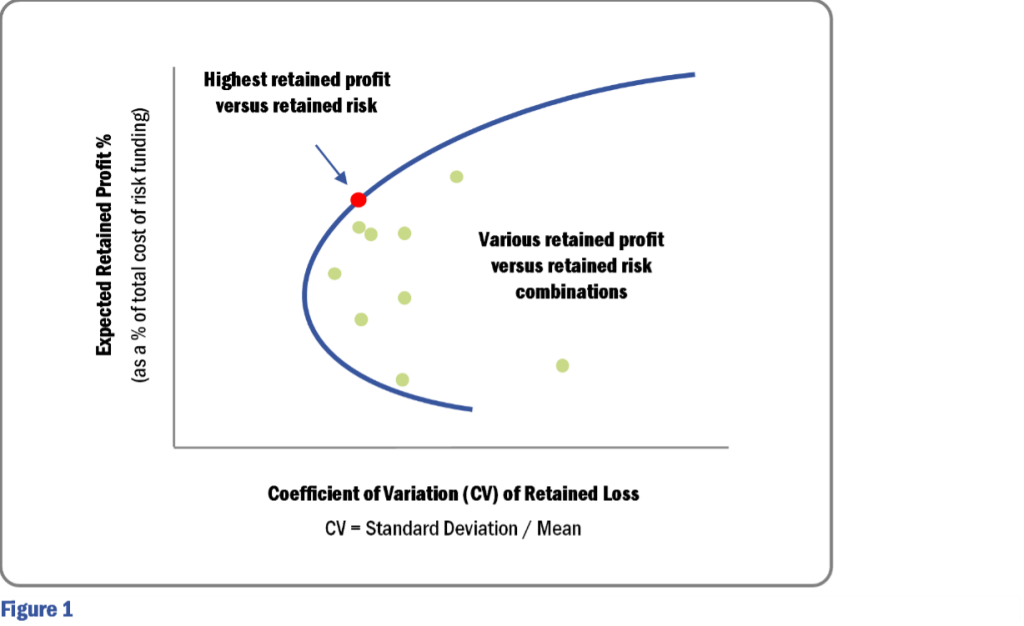
There is an optimal combination of retained risk that maximizes the ratio of profit to risk volatility (“PR Ratio” = “Profit to Risk Ratio”) for each insured within a captive programme.
This is represented by the red dot and is similar to the concept of modern portfolio theory, except we are looking at retained profits relative to retained insurable risks and are not focused on investment strategy.
The key takeaway is when it comes to an insured’s captive risk funding programme, there are various other reasons why optimizing your risks is important. These reasons include:
Taking into account these various issues that drive the need for occasional but regular risk optimization studies, Spring has developed the following five-step process:
In this initial stage, it is important to focus on confirming the goals and objectives of your captive, both new and old.
Have the older goals been achieved? How have they changed over the years? Will your current corporate strategy elicit the creation of new goals?
Also critical at this early point is the collection of data, and not only the stats and facts of the captive, but also the more subjective (qualitative) data that can be gleaned through management interviews and informal stakeholder surveys.
The goals stage highlights your current insurable risks and your means to fund that risk. Some of the most common P&C risks to insure in captives include, but are not limited to:
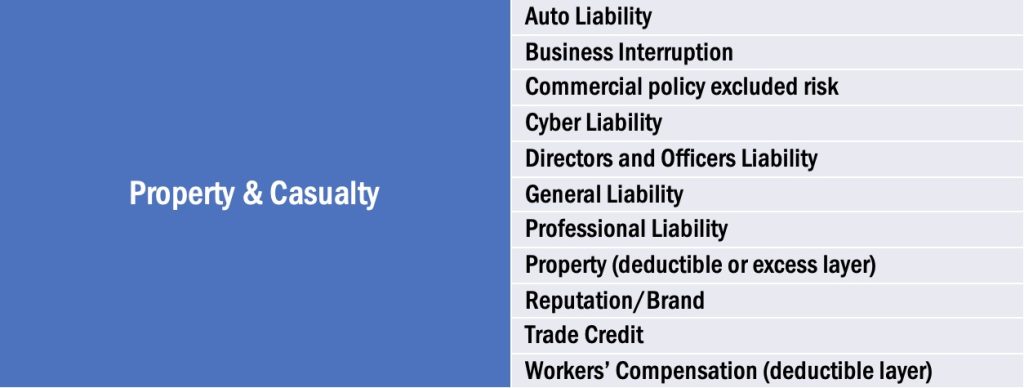
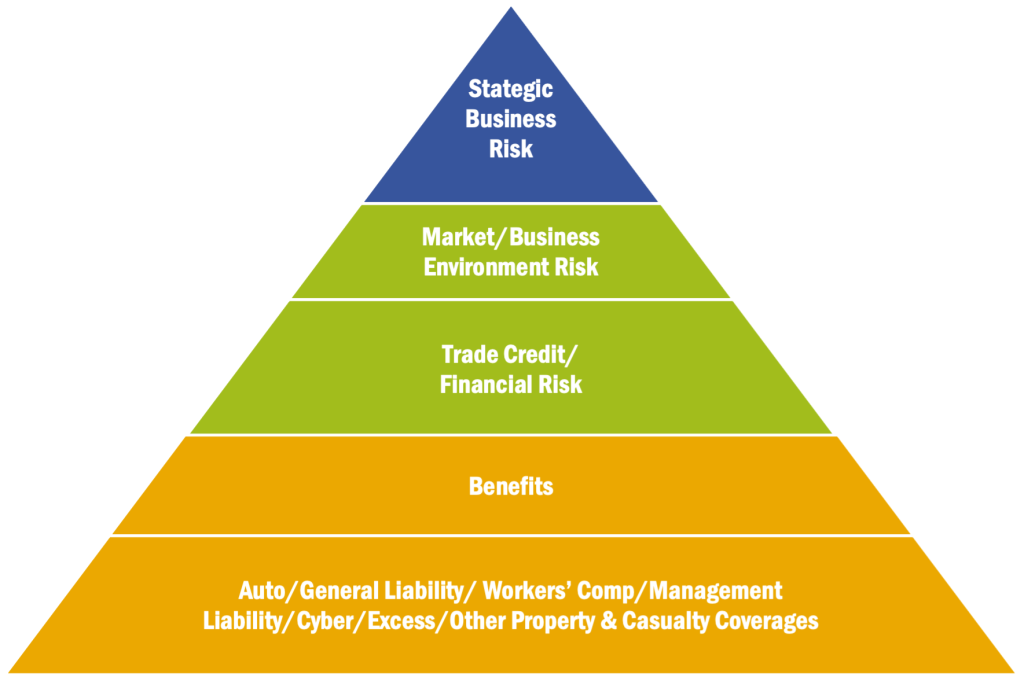
In this phase, a professional captive optimizer would first analyse any additional lines of coverage that could be insured by your captive. The key is to determine the possible return by line and then prioritize them.
The risk hierarchy exhibit below shows the typical order of prioritization, starting with the bottom layer and working up.
Secondly, a surplus management strategy would be developed. There are many considerations in appropriately managing the capital and surplus levels over the life of a captive, including average cost of capital, retention levels, reinsurance use, taxes and others that a team of actuaries and consultants would review and develop strategies to address.
Now that you know what you want to do and how, it’s time to take a closer look at how it will all work together in a logical structure.
Economic trends and market changes should give you some food for thought. For example, pure captives are increasingly changing to sponsored entities.
It is important to identify investment management best practices as well as the optimal collateral structure.
The Impact Stage of a Risk Optimization Study involves looking at all the different pieces of the captive puzzle to determine how they would be affected by the changes you’re considering.
A few activities here would include:
Finally, all sound captive projects end with measurement. This is the time to determine to what extent goals were met and impacts made.
A great deal of this stage relies on the creation of solid industry benchmarks against which to measure current and future captive performance. It is also important to develop implementation plans based on what you uncover.
At the conclusion of the measurement phase, Spring would produce a risk optimization study report detailing all the findings of the risk optimization study that are outlined and reviewed along with the recommendations developed in this last phase.
These findings can serve as a baseline for measurement going forward.
Regardless of how old or new your captive is, there are bound to be numerous internal and external factors that have changed since it was created.
In 2023, the market is a bumpy ride, making it a great time to have a professional not only take a snapshot of how your captive is currently performing, but also help you project and strategize as to where your captive should be in the future.
Hearings in North Carolina’s Senate have concluded with unanimous floor passage of SB 319, which, if passed, would extend the premium tax holiday for captives re-domesticating to the State until 2025.
The Insurance Revision Bill was originally introduced by the North Carolina Captive Insurance Association (NCCIA) last month, with the Bill heard and given favourable reports by the Senate Finance Committee on Monday, 24 April.
The Bill was then referred to the Senate Rules Committee which approved it on Wednesday 26, and then sent to the Senate Floor on Thursday where it passed both second and third readings.
Senator Todd Johnson was the Bill’s primary Senate sponsor.
“We are fortunate to have Senator Johnson as our primary sponsor,” said Tom Adams, NCCIA president.
“His knowledge of insurance and our products has been a key factor in the success of our legislation over the past two legislative sessions.
“Bills such as SB 319 are notoriously difficult to pass due to the loss of tax revenue to the State that is embodied in our bill. We look forward to it’s passage in this session of the General Assembly.”
In 2022, North Carolina introduced legislation that waived premium taxes for the year in which a captive re-domiciles. It also waives the next year’s premium taxes.
The waiver is designed to encourage captives to re-domicile to North Carolina, but the original legislation did not run for the full two years originally intended.
After Senate passage, the Bill has been messengered to the House where it will follow a similar path. Representative Chris Humphrey will be the primary sponsor in the House.
SB 319, if passed, will extend its application until 1 January, 2025.
Leon Rives, Jeremy Colombik and Alex Webb have been named as the initial board of directors of NC Captive PAC, the new political action committee of the Association, by Diana Hardy outgoing chair of NCCIA.
“The Board and I have charged the new board with the organisation and raising the initial corpus of the PAC,” Hardy said.
“As past Chairs of the association they are familiar with the membership, and I know from personal experience they’re not afraid to ask for a buck.”
The initial goal for the committee will be to raise around $15,000-$20,000 thousand over the next two years.
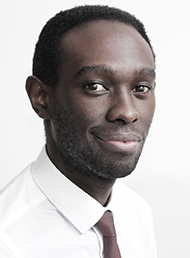
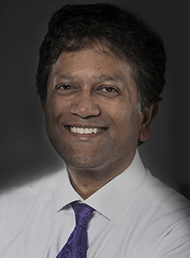

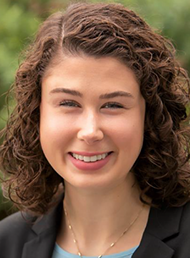
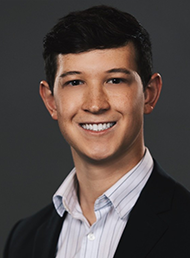
In episode 84 of the Global Captive Podcast, supported by the EY Global Captive Network, Richard is joined by Fluid Truck’s Courtney Claflin to discuss their new captive formation, London & Capital’s Shadrack Kwasa and Rabbani Wahhab to review the Q1 economic landscape, and three members of CICA’s NextGen initiative – Claire Richardson, Dylan Feringa and Bailey Roese.
Time stamps
0.00 – 3.00: Introduction
3.00 – 10.30: Courtney Claflin, head of insurance, discusses Fluid Truck’s captive formation in Washington DC.
10.40 – 23.30: Shadrack Kwasa, executive director, and Rabbani Wahhab, senior fixed income fund manager, discuss a messy quarter involving inflation edging lower, a confusing jobs market and banking disruption – and, of course, what all that means for captives and their investment managers.
24.30 – 39.50: CICA NextGen members Claire Richardson, of Hyant, Dylan Feringa at PNC Institutional Asset Management, and Bailey Roese, partner at Dentons, discuss why they have got involved and what appeals to them about the captive insurance industry.
For all the latest news and analysis of the global captive insurance market, visit CaptiveIntelligence.io and sign up to our twice-weekly newsletter here.




A small Florida trucking business may have to shut-up-shop if a Florida bill targeting risk retention groups and surplus lines carriers is passed into law.
“If this bill goes through, I might have to either close my doors or I might have to relocate to another state,” Linda Allen, CEO at Hardcore Trucking, told Captive Intelligence.
“I have a small trucking company, and I have two trucks. Florida is one of the most expensive states to have truck insurance, and I pay $36,000 a year. I carry a $1m coverage on each truck.”
Under the current proposals, any RRGs operating in the state would require an AM Best “A” rating and a minimum financial size of $100m in capital surplus in order for an RRG to write commercial auto liability in Florida.
“I mean, the big thing they need to do is all the AM Best rating language needs to be removed and a hundred million of reserve money needs to be removed,” said Lewie Pugh, executive-vice president at Owner Operator Independent Drivers Association (OOIDA), which owns a RRG with members operating in the state.
“If they take that out, the bill would be fine.”
Pugh said the proposals could be very damaging due to small business truckers operating on very tight margins. Bill 516 could see insurance premiums hike substantially.
“If you take the RRGs out of the insurance market, you’re just going to make prices go up because there is less competition,” Pugh said. “That’s normal capitalism and basic economics.
“Everything’s very expensive for truckers with very little profit. Insurance is one of your biggest expenses and Florida is one of the top three most expensive states to procure insurance for commercial auto. So, it makes it very challenging for small business truckers to find affordable insurance.”
As a result of costly insurance prices, small business truckers often join an RRG as a means of bringing their costs of insurance down.
Joe Deems, executive director of the National Risk Retention Group Association (NRRA) previously said that imposing the requirements would eliminate coverage for 96% of the companies that use RRGs for commercial auto coverage.
“If this bill passes,” Deems said, “it will destroy everything they have that’s working.
“If Florida can get away with violating the federal law by making any financial rating a requirement to do business in their state, it may set a precedent to make other states bolder to do the same thing.”
Hope?
However, there is hope that law makers in the state might reverse their decision after hearing industry concerns about the impact the proposals could have on RRGs in Florida.
“Lawmakers were very open to what I said and very sympathetic and very understanding,” Pugh added.
“I don’t think they realised the unintended consequences of the way this bill was written, and the effect it was going to have on small business truckers and other RRGs.”
Pugh said he was 75% confident that the bill would not go through in its current format.
Allen highlighted that when she testified against the bill, her senator said “I don’t even know why you’re concerned about this?”
“And I said I’m concerned because I do business in the state, and I want to continue to do business in the state.”
Last week, NRRA announced three stages of fundraising plans to in order to combat the Florida bill.
If the Bill passes with the current language, NRRA said its final phase of the campaign would be to commence litigation to and challenge it at the federal level, with an estimated cost of $150,000.
© 2025 Global Captive Media Ltd.