Saturday, April 25, 2026

Membership options

Home Blog Page 38

American Hardware and Lumber Insurance diversifying members, expanding auto coverage 

Bermuda-domiciled Member Insurance Ltd is diversifying its membership as well as expanding its commercial auto coverage, the company’s president and CEO, Scott Reynolds, told Captive Intelligence

Member Insurance Ltd, which owns agency American Hardware & Lumber Insurance (AHLI), is a Class 3 Bermuda insurance company that operates as a mutual. 

Subscribe to Ci Premium to continue reading
Captive Intelligence provides high-value information, industry analysis, exclusive interviews and business intelligence tools to professionals in the captive insurance market.


BevCap hires Dawn Dinardo as SVP of captive operations 

BevCap Management, a programme manager for casualty and medical stop loss captive insurance companies in multiple domiciles, has appointed Dawn Dinardo as senior vice president of captive operations.    

The organisation builds and runs several member-owned group captives in the US, including BevCap Captive Group, BevCap Health and Sharefield. 

Subscribe to Ci Premium to continue reading
Captive Intelligence provides high-value information, industry analysis, exclusive interviews and business intelligence tools to professionals in the captive insurance market.

Captive option increasingly viable for defined benefit pension schemes – Aon  

0

Corporations are increasingly exploring captive options for defined benefit pension scheme strategies, as funding has reached healthier levels. 

A defined benefit pension scheme is a type of workplace pension that provides a guaranteed income for life, and the amount of this income is typically based on the employee’s salary and length of service with the company. 

In the United Kingdom, as well as other countries, a defined benefit pension scheme is a separate legal entity from the sponsoring company and is overseen by a fiduciary, typically a board of trustees, who are responsible for acting in the best interests of the scheme’s members. 

Speaking on the latest episode of the Global Captive Podcast Alex Skinner, associate partner in Aon’s UK Retirement practice and leader of Aon’s pension captive solutions team, was joined by Mike Pickard, director of global ILS and commercial management at Aon.

“In the UK there are around 5,000 workplace defined benefit pension schemes, and those pension schemes are holding about $1.2tn of assets,” said Skinner. 

“There is huge economic value tied up in these pension schemes.”  

Skinner explained that in the UK, pensions schemes have seen a significant improvement in funding levels in recent years, which has prompted companies to think about how they can run them more efficiently. 

“The Pensions Regulator’s research suggested that over half of the pension schemes in the UK were so well-funded that they could afford to fully insure members’ benefits with an external insurance company – and still have surplus left over,” Skinner said. 

It can be challenging to extract surplus assets from pension schemes in some cases, because of the role of trustees and their duties towards members.


“So now, companies are starting to think more and more about using a captive as an alternative – where, under the captives regime, the company has full control over investment and operations,” Skinner added. 

When involving the captive, a pension fund enters into an annuity contract – either a buy-in or a buy-out with a PRA-regulated UK life insurer. 

Behind the scenes, the life insurer – charging a fronting fee – then reinsures the risk to the sponsor’s captive. 

“In doing so, the majority of the assets and liabilities are effectively transferred to the captive as part of the reinsurance premium,” Pickard explained. 

“Over time, the captive will crystallise a profit, which should be broadly equivalent to the profit the life insurer would have earned in a traditional bulk annuity deal.” 

During this period, the captive can benefit from the investment returns generated on those assets. 

Skinner said pension captives give a corporate the ability to have full control over the investment of the assets and the operations and can generate a new stream of cash flows and profits for their business. 

Pickard added: “A pension captive can release say 20% of profit over its lifetime, it’s well worth the effort and time taken to get this structure right and getting the feasibility right at the outset.” 

A recent transaction, advised and executed by Aon, utilised a standalone, single parent Bermuda-domiciled captive. 

Pickard said he is discussing the use of captives for such transfers of defined benefit schemes in a range of domiciles, including Vermont, Malta, the Isle of Man, Bermuda, Guernsey, the Cayman Islands, and Singapore. 

“These are all domiciles where we’ve engaged with local regulators and facilitated introductions to our clients,” he said. 

In terms of structure, Pickard said the schemes can be implemented through a protected cell or an incorporated cell, but “what we’re seeing in most cases is a preference for setting up captives in their own right”.  

A key reason for this trend is the desire for greater control. 

“These vehicles can be substantial in size, often holding assets of $1bn or more, so having full ownership and control over the captive structure makes a lot of sense to many of our clients,” he said. 

Skinner said Aon has clients who have started executing global strategies for bringing together and financing pensions schemes for multiple countries, and the inclusion of a captive in such an approach can be appealing. 

“We’ve seen less of that in the United States – very little, frankly – because there are some challenges specific to the US,” he said. 

“But we are starting to see activity emerge here, and we could see transactions like this, involving US plans, happening more and more.” 

Skinner said a global pension captive would be a great way to finance a global pensions programme, and could be particularly effective when structured as cell company fully owned by the group with individual cells supporting each scheme. 

“It’s much more capital-efficient than running multiple pension schemes in different countries,” he said. 

“Having it in a consolidator – like a pension captive – gives you the ability to offset a surplus in one place with a deficit in another.” 

W1M launches as London & Capital and Waverton complete rebrand 

London & Capital and Waverton Investment Management have officially become W1M today.  

This follows the announcement in March that the two brands would consolidate under this new name to offer clients one home for wealth and investment management. 

Subscribe to Ci Premium to continue reading
Captive Intelligence provides high-value information, industry analysis, exclusive interviews and business intelligence tools to professionals in the captive insurance market.
Nevada Captive Insurance Council elects new board

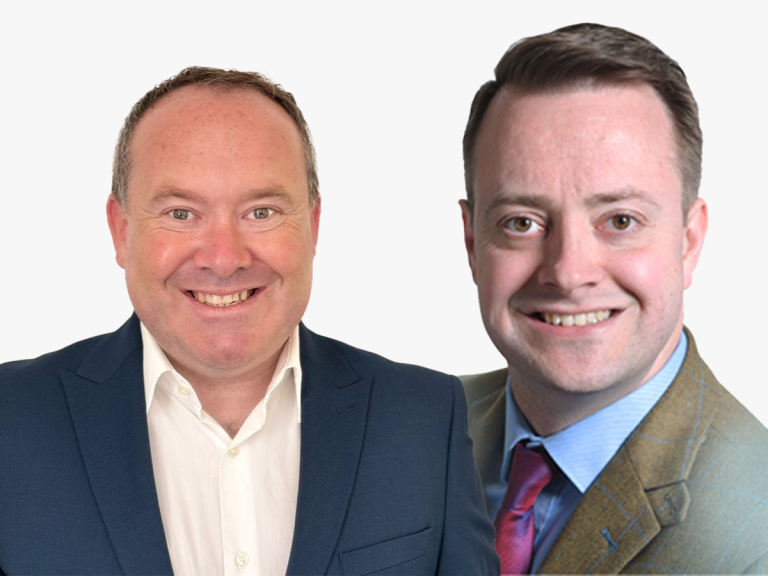
The Nevada Captive Insurance Council (NCIC) has elected a new board with Josh Miller, CEO of KeyState Captive Management, as president, and Renea Louie, CEO of Sotera Global Management, has been re-elected secretary.

Leon Rives, chief visionary officer at RH CPA’s, has been elected as the new treasurer.

Subscribe to Ci Premium to continue reading
Captive Intelligence provides high-value information, industry analysis, exclusive interviews and business intelligence tools to professionals in the captive insurance market.
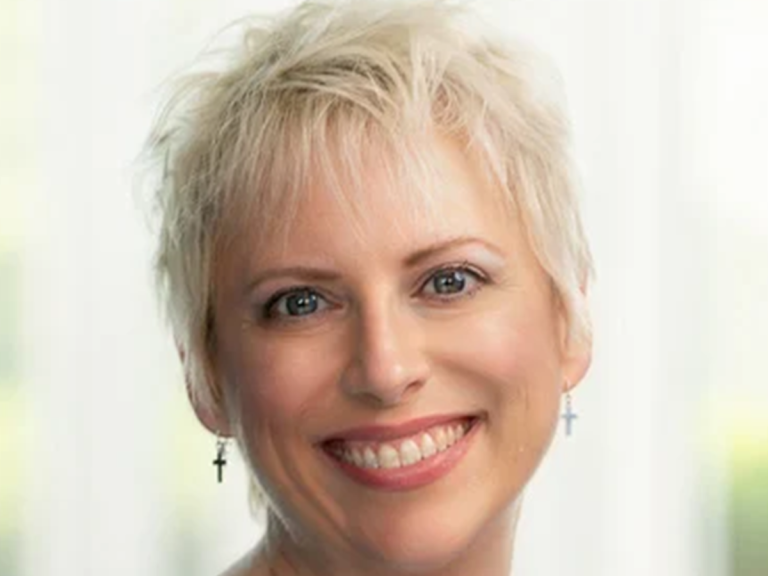
Edwina Leclere to lead new WTW captive team in France

WTW has appointed Edwina Leclere as associate director of captives and insurance management solutions for France, to lead growth in the region and establish a captive management team based in Paris.

The number of captives in France has steadily increased since the jurisdiction introduced specific captive legislation in June 2023, with France widely considered as Europe’s biggest captive success story over the past few years.

Subscribe to Ci Premium to continue reading
Captive Intelligence provides high-value information, industry analysis, exclusive interviews and business intelligence tools to professionals in the captive insurance market.
Lack of commercial appetite drives pharma, life sciences captive spike


  • Handful of largest 20 firms can get product liability cover
  • Some write just one or two lines, while others take ‘Captive First’ approach
  • Captive can centralise data, claims andspot emerging patterns effectively

Captives are an attractive proposition for the pharmaceutical, biotech and life science industries, due to a lack of appetite and capacity being offered by the commercial market, particularly for product liability cover.

Insurers are forcing companies in this space to take higher deductibles, offering lower limits, and tightening terms and conditions.

Subscribe to Ci Premium to continue reading
Captive Intelligence provides high-value information, industry analysis, exclusive interviews and business intelligence tools to professionals in the captive insurance market.

AM Best assigns rating to Mondelez International captive 

AM Best has assigned a financial strength rating of B++ (good) and a long-term issuer credit rating of “bbb+” (good) to Ireland-domiciled Berkeley Re Designated Activity Company (Berkeley Re). The outlook for the ratings is stable. 

Berkeley Re is a captive composite reinsurer for Mondelez International, a global confectionary, food and beverage company based in the United States. 

Subscribe to Ci Premium to continue reading
Captive Intelligence provides high-value information, industry analysis, exclusive interviews and business intelligence tools to professionals in the captive insurance market.

Global Captive Management launches Outcomes SPC 

Global Captive Management (GCM) has launched Outcomes SPC, a segregated portfolio company, to provide a captive structure with less entry barriers for small companies looking to utilise captives. 

Cayman-domiciled Outcomes SPC, functions within a shared structure, so firms can utilise economies of scale while remaining isolated and separate. 

Subscribe to Ci Premium to continue reading
Captive Intelligence provides high-value information, industry analysis, exclusive interviews and business intelligence tools to professionals in the captive insurance market.

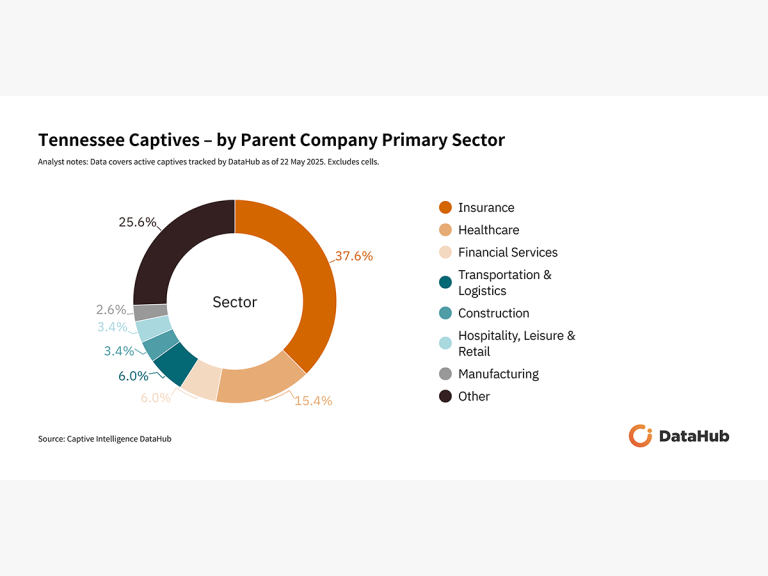
Domicile Wars: Business friendly environment and ‘yes’ attitude key to Tennessee growth


  • Early adopter of captives with legislation introduced in 1978
  • Series cell regime particularly popular structure
  • Large concentration of healthcare captives as Nashville healthcare hub 

Tennessee’s business friendly environment and ‘say yes’ attitude are two of the reasons behind the jurisdiction’s continued growth as a captive domicile. 

Eleven new pure captives and 94 new cells were licensed in Tennessee during 2024, and at the end March this year the domicile had 182 total captives and 657 active cells. 

Subscribe to Ci Premium to continue reading
Captive Intelligence provides high-value information, industry analysis, exclusive interviews and business intelligence tools to professionals in the captive insurance market.